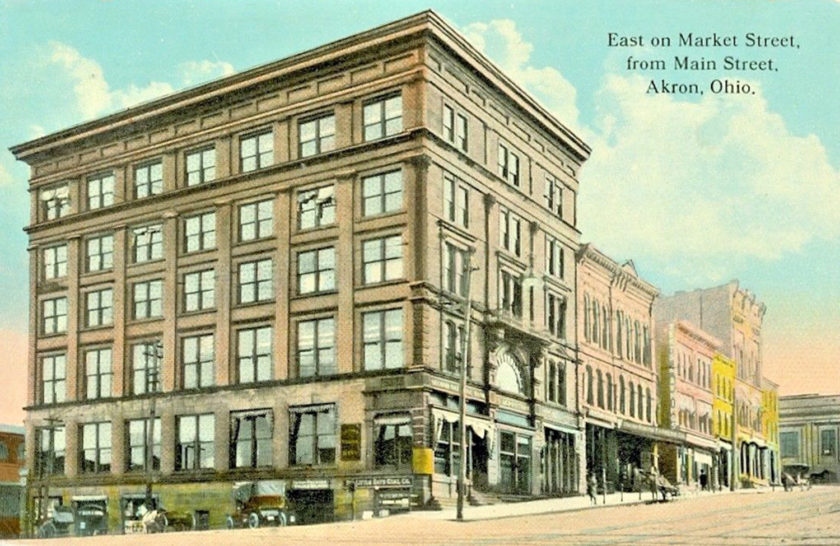
A vintage view of Akron’s busy Market Street looking East from the bridge.
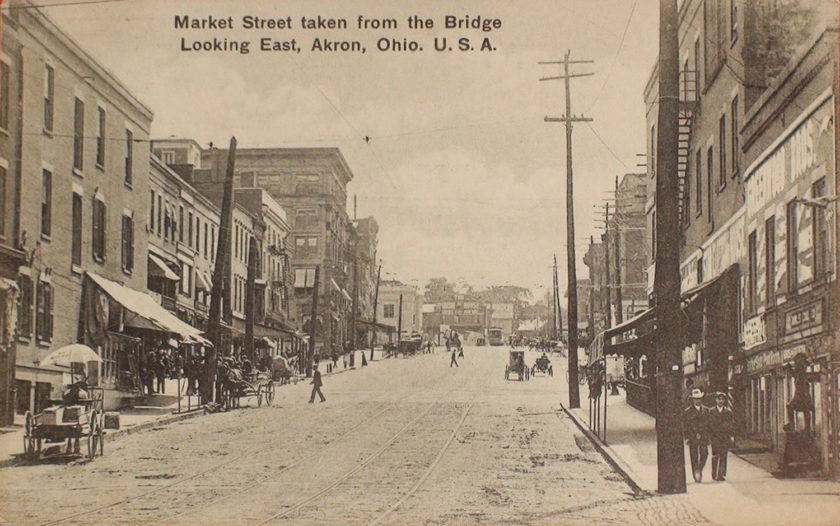
A vintage view of Akron’s busy Market Street looking East from the bridge.
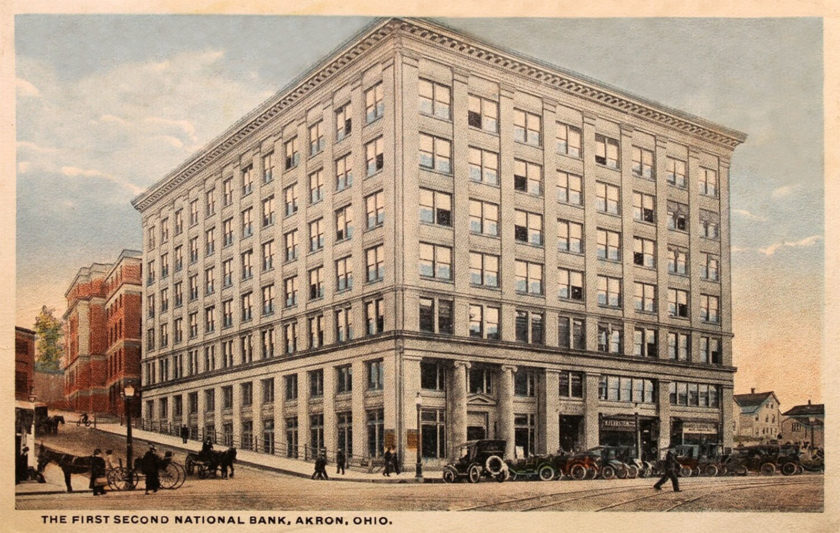
Constructed in 1911, the First-Second National Building is located on the southeast corner of South Main Street and East Bowery Street. In 1919, four additional floors were added to the building. Although it was designed for the Second National Bank, during construction the bank merged with the First National Bank to form the First-Second National Bank.
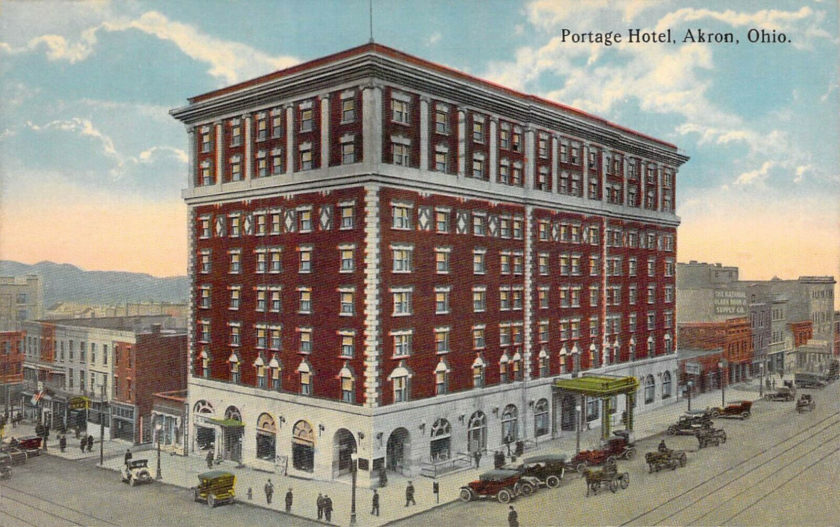
The Portage Hotel, located downtown at Main Street and Market Street, replaced the former Empire House Hotel in 1912 and served as Akron’s leading hotel until the opening of the modern Mayflower Hotel in 1931.
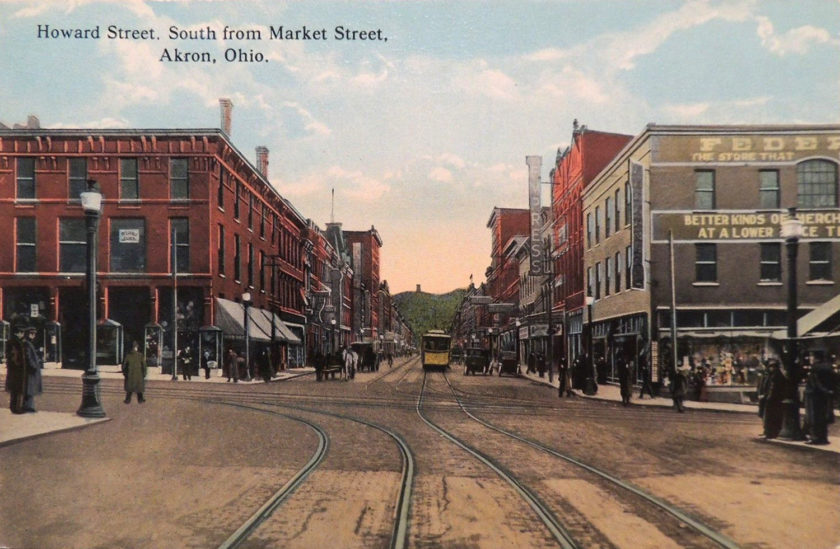
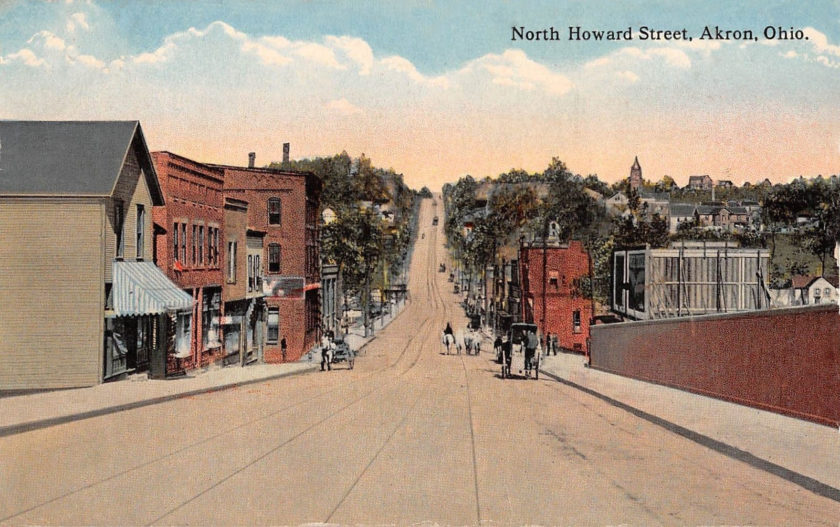
It may be unrecognizable today, but the one-time importance of Howard Street can easily be seen in this postcard view as it appeared looking South from Market Street. Busy people, cars, horses with carts, and trolleys fill the scene outside Federman’s “Lowest Price Store” in Akron.
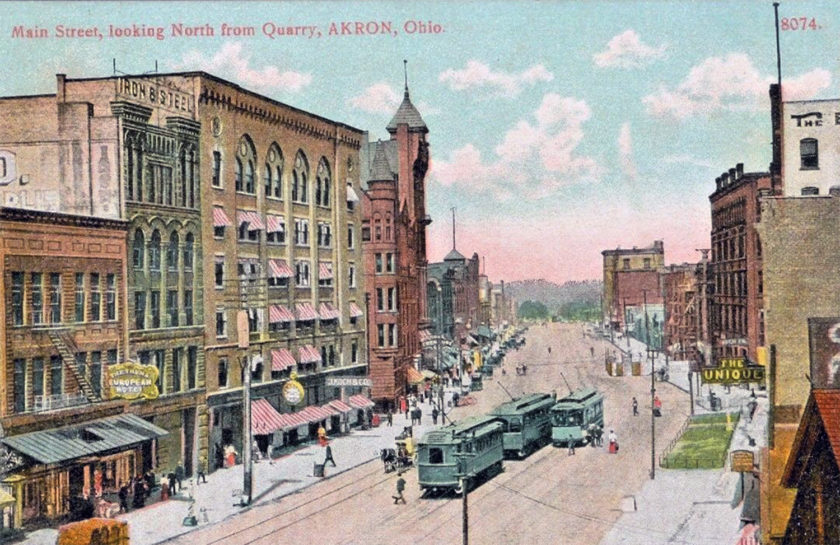
The Unique theater on Main Street was one of Akron’s famous vaudeville theaters. Around 1905, The Unique would be converted into Akron’s first motion picture theater.

The Empire House opened on November 20, 1847. The hotel served Akron visitors until it was torn down in 1912 to make way for the Portage Hotel.
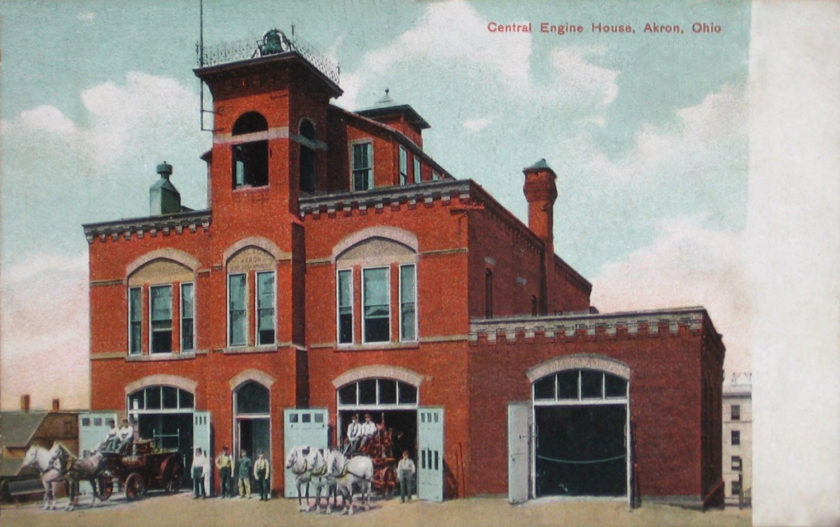
Akron Fire Department has a long and proud history dating all the way back to 1839 when the North Akron Fire Company was formed. Akron’s volunteer fire-fighting forces were consolidated to form the “Akron Fire Department” in 1866. The members of the department were placed on a full pay basis in 1903. The department was…

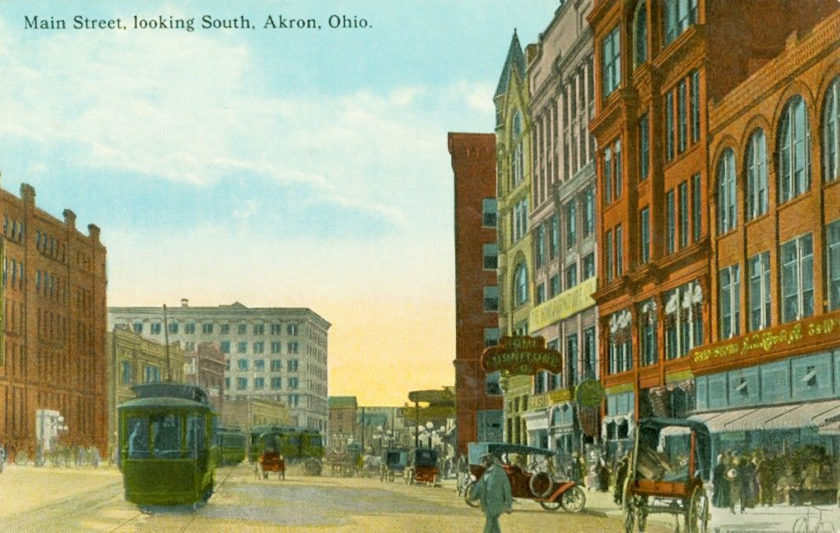
A view of a busy Main Street looking North with Mill Street as the first intersection. Akron was central to the street car and interurban rail traffic of the day.
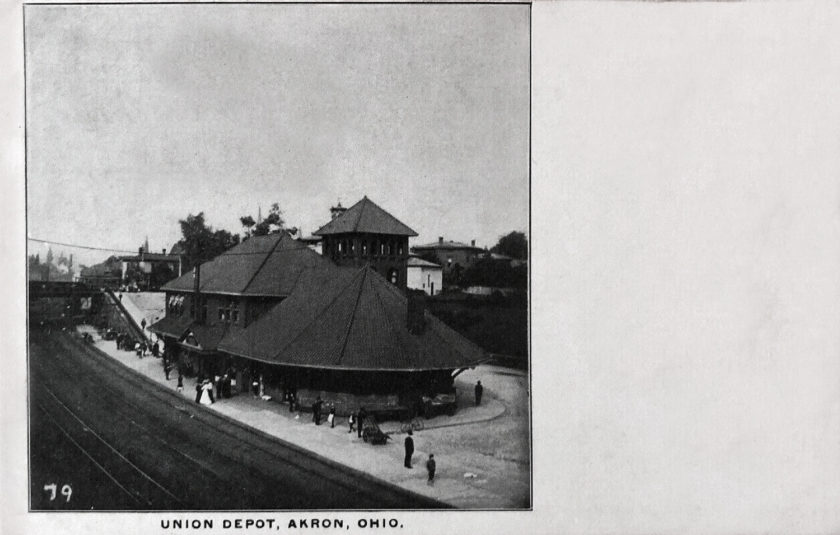
Built before the rubber boom, Akron’s Union Station quickly showed its inadequacies as the city’s population exploded. Although additions were made, the station was never large enough to handle the popularity of Akron. In 1950 a new Union Depot was built to replace the aging structure and by 1951 it had been demolished.
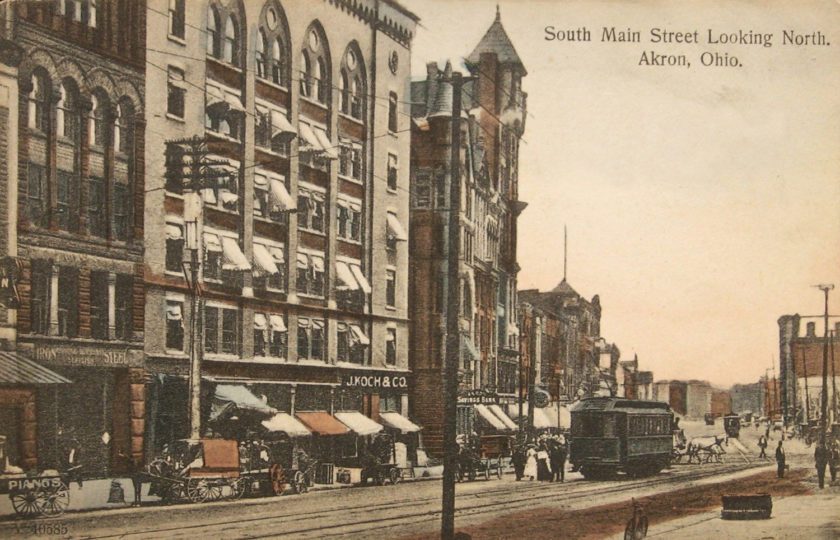
At a time before automobiles ruled the streets, most of Akron’s leading stores, theaters, and hotels were located along South Main Street. Trolley’s and horse carts added to the bustle of downtown.
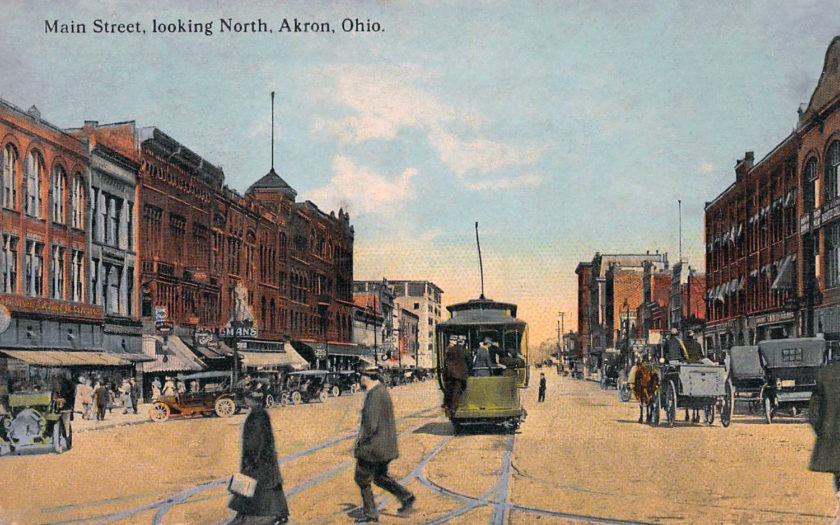
An early view of Akron’s Main Street complete with streetcar, horse cart and vintage automobiles.
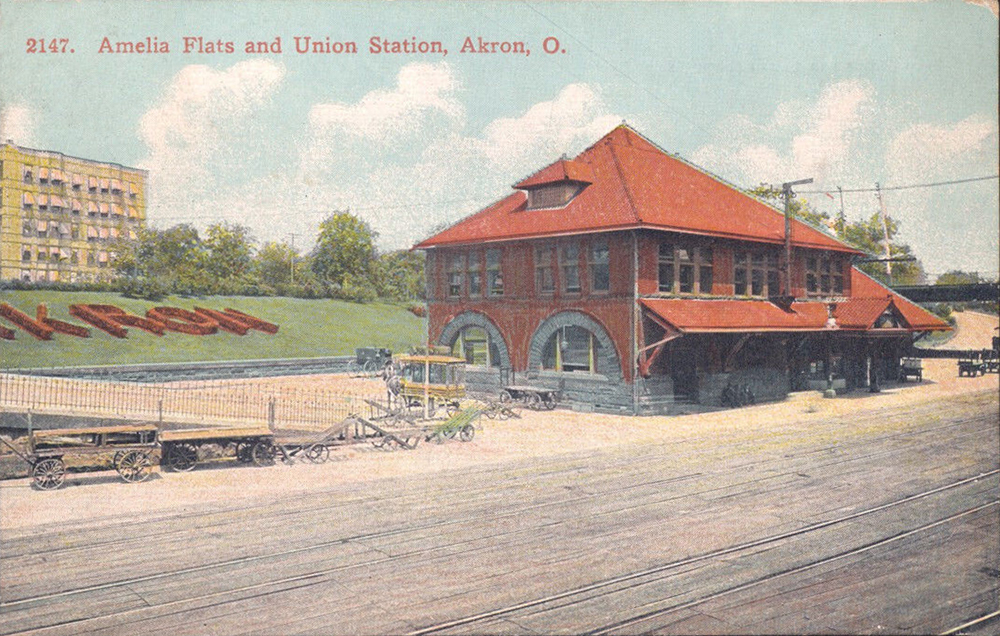
Amelia Flats was the first of two apartment building constructed by businessman Horace B. Camp (1838-1907). The flats were built as upscale suites in a neighborhood well known for its affluent residents – Barber, Buchtel, Bierce, Firestone, Hower, Seiberling and Schumacher.
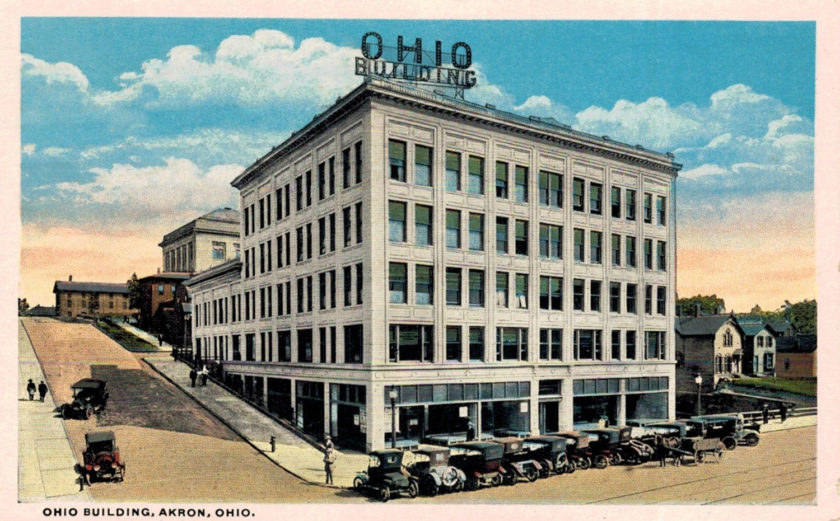
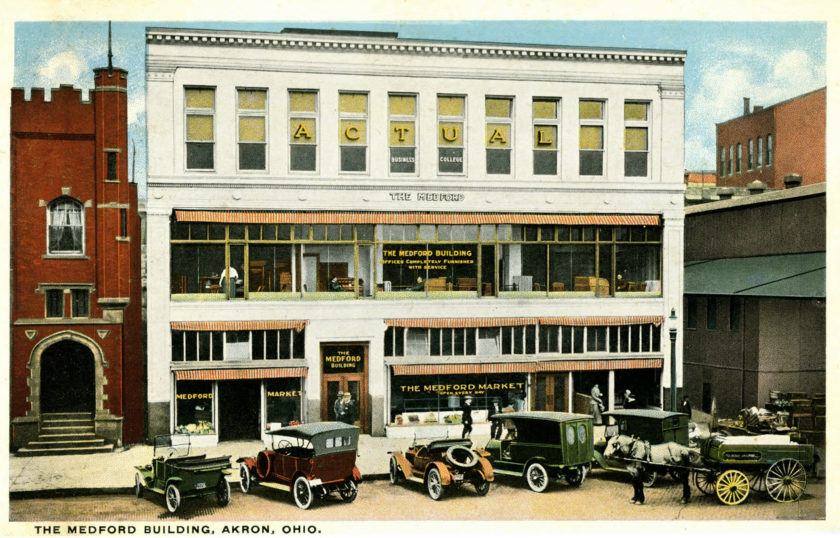
This is the Ohio Building in Akron, Ohio. In this postcard view, old cars can be seen parked along the front and side of the building. Additionally, a horse and cart are seen on the street making deliveries.
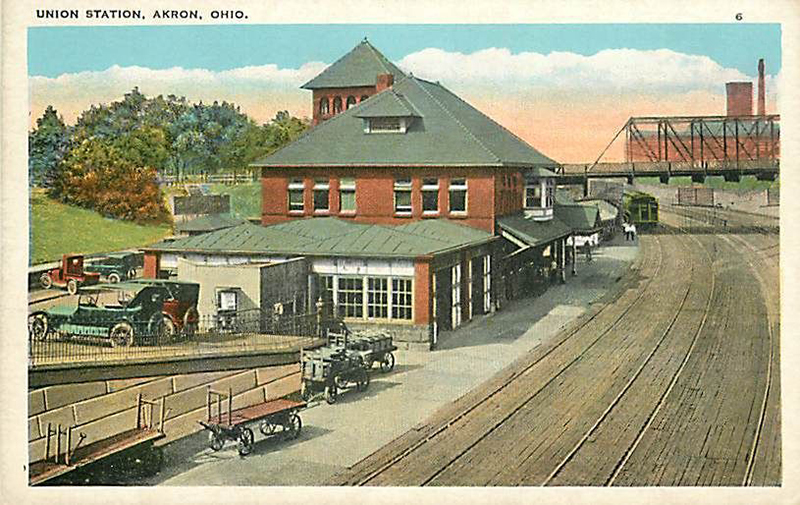
The city’s second Union Station was built in 1891 and demolished in 1951. It was located between East Market and Park streets. This station served the Baltimore & Ohio (B&O), Cleveland Akron & Columbus (CA&C) and the Erie Railroads. It was replaced by Union Depot.
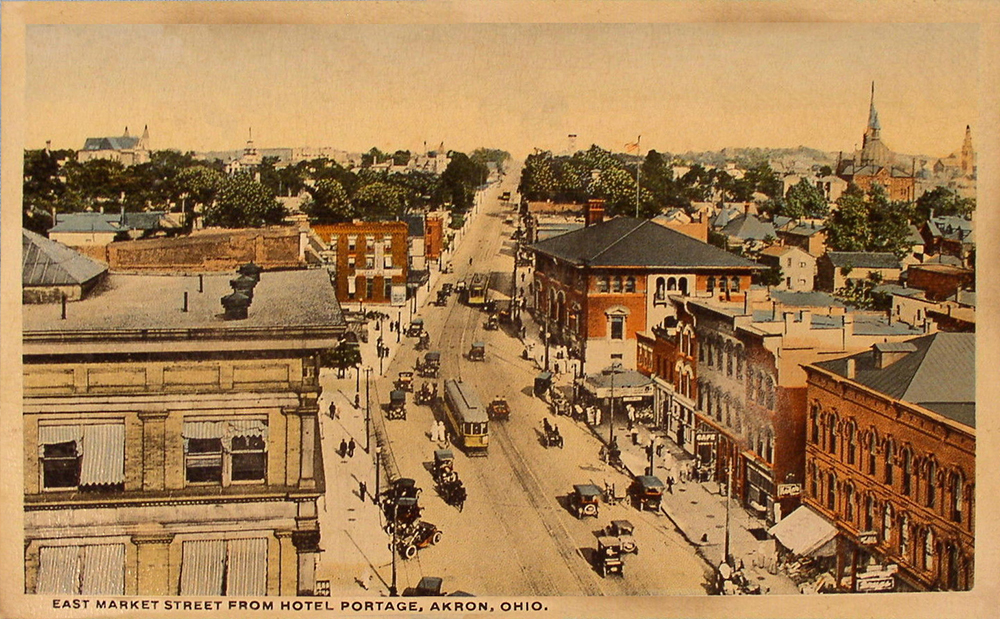

Michael O’Neil and his partner Isaac Dyas began serving Akron shoppers in 1877. Their first store was a dry goods store located at 114 East Market Street. Before being sold in 1912, O’neils had several locations in the Akron Canton Area.

Amelia flats was a five-story apartment building, which stood on Park Street across from picturesque Grace Park, it was one of the city’s earliest apartment houses when opened in 1901.
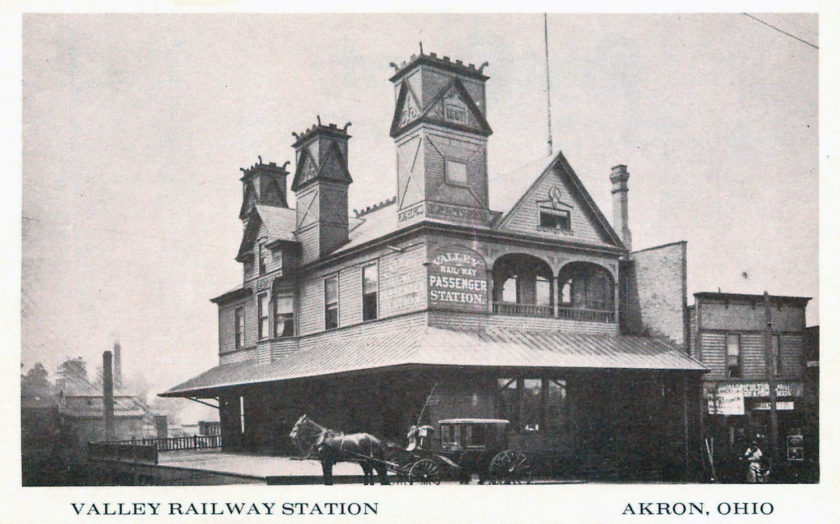
This ornate railway passenger station, built in 1888, was located on the corner of West Market Street and South Canal Street. The station was built to relocate passenger service from the railroad’s less convenient station at North Howard and Ridge Streets. The Valley Railway reached from Cleveland to Akron via the Cuyahoga Valley and then south to Valley Junction…
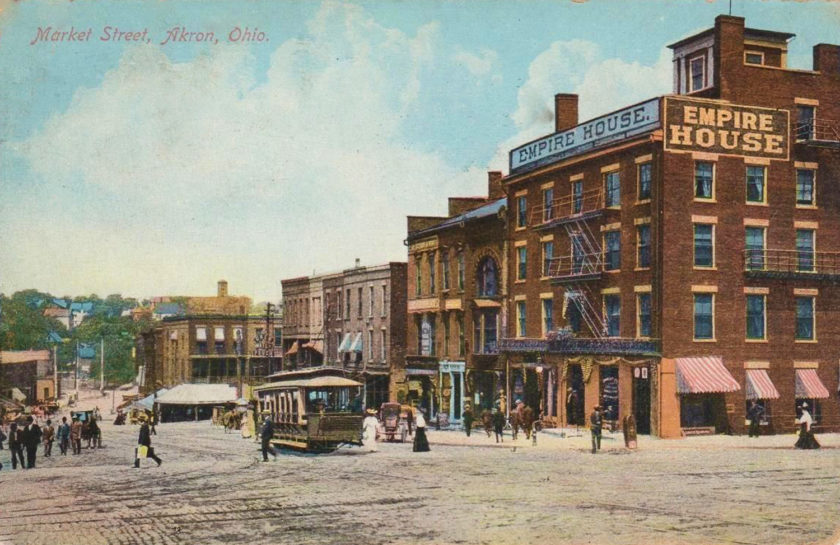
Very old view of the Empire House on Akron’s Market Street. The area is busy with activity as a trolley moves through the scene. By 1912, the Empire would be destroyed to make way for the new 250-room Portage Hotel.

Mills of the Quaker Oats Co. can be seen in the background of this postcard. The former CA&C/Railway Express Agency station is in the foreground. A railroad boxcar is being loaded on the team track at the right of the image. The image was taken from the mill street bridge over the city’s main railroad lines.

In 1896, seven cars entered America’s first automobile race held on a track – it was the five-lap “Providence Horseless Carriage Race”. To the awe of 60,000 spectators, the Riker Electric Trap No. 1, using Diamond Rubber Company tires, took home the checkered flag. The car averaged about 20 miles per hour.