Akron is the fifth-largest city in Ohio and is the county seat of Summit County. It is located on the western edge of the Glaciated Allegheny Plateau, approximately 39 miles south of Lake Erie Cleveland, Ohio.
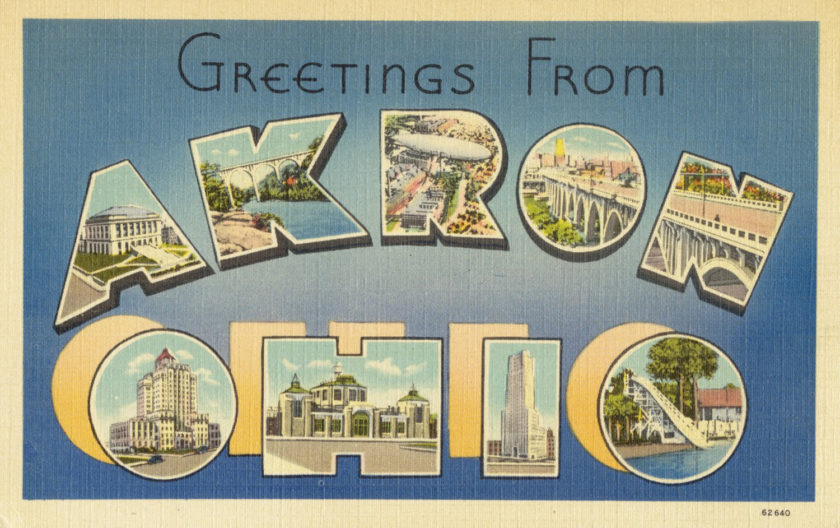

Akron is the fifth-largest city in Ohio and is the county seat of Summit County. It is located on the western edge of the Glaciated Allegheny Plateau, approximately 39 miles south of Lake Erie Cleveland, Ohio.
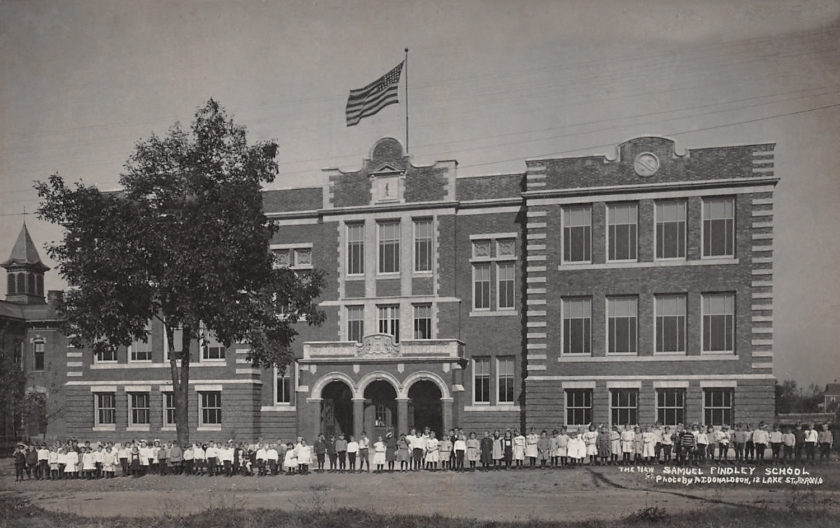
Akron’s Samuel Findley School was built in 1906. The building was designed by architects Harpster & Bliss. Elements of the Beaux Arts style with additional Classical Revival details were evident throughout the exterior and interior of the school. The school was once located in the triangular lot created by W. Tallmadge Ave, W. Cuyahoga Falls Ave.,…
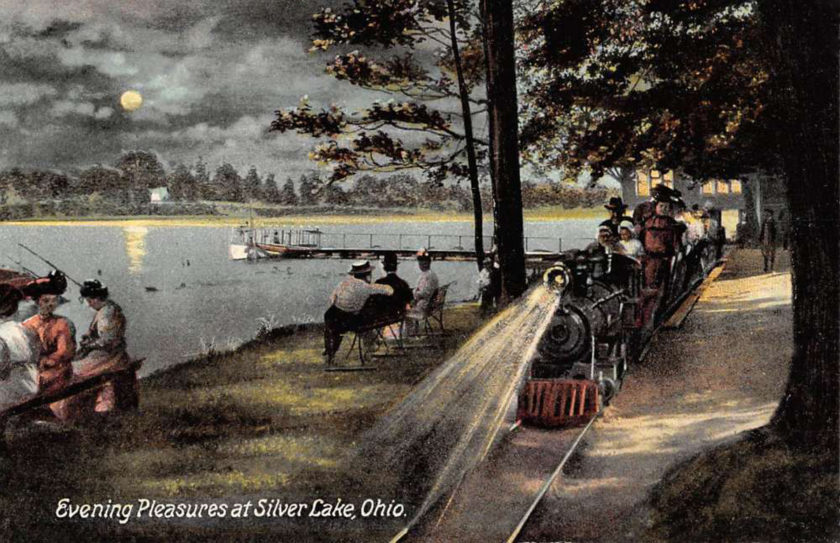
An evening train ride through the Silver Lake Park on the shores of Silver Lake near Cuyahoga Falls, Ohio. The train was just one of many attractions at the park, including a dance hall, small zoo, amusement rides, picnic areas, and steamboat rides. The first conductor on the Silver Lake Miniature Railroad was Sammy Wise…
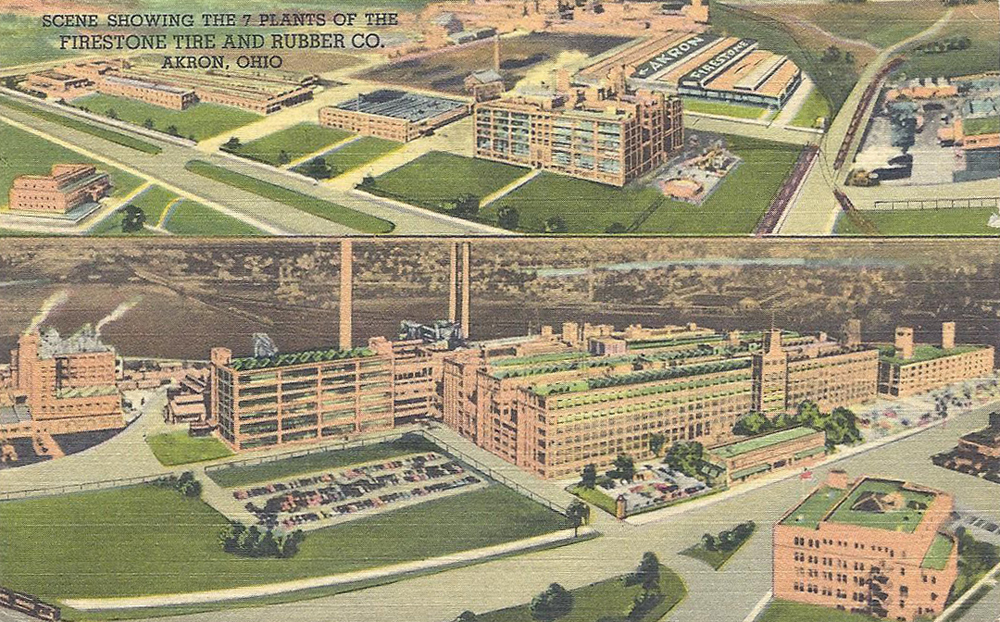
In its first year of operation, the Firestone grossed more than $100,000 in profit. Initially, the company was not involved in the actual production of rubber. Instead, they purchased premade rubber and attached it to carriage wheels.
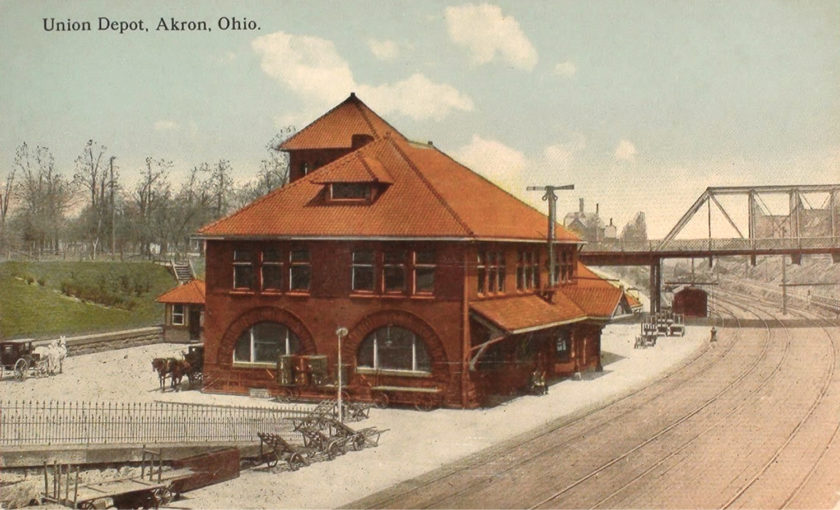
Akron’s second Union Station was constructed in 1891 and had several addition made before being demolished in 1951. The facility was located in Akron’s downtown between East Market Street and Park Street. Akron’s Union Station served three major railroads including the Baltimore & Ohio railroad, the Cleveland Akron & Columbus railroad (Pennsylvania Railroad), and the…
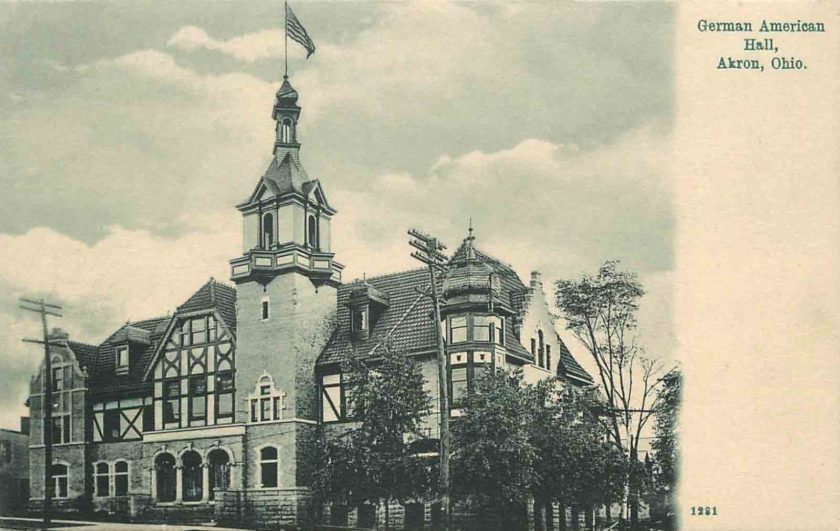
Funded by Werner Printing and Lithograph Company’s founder, Paul E. Werner, the German American Hall was constructed as a place for German activities. He called it “The Deutsch Haus” (The German House). As anti-German sentiments arose during World War I, it became necessary to rebrand the building as simply the Music Hall. Location: 44 E.…
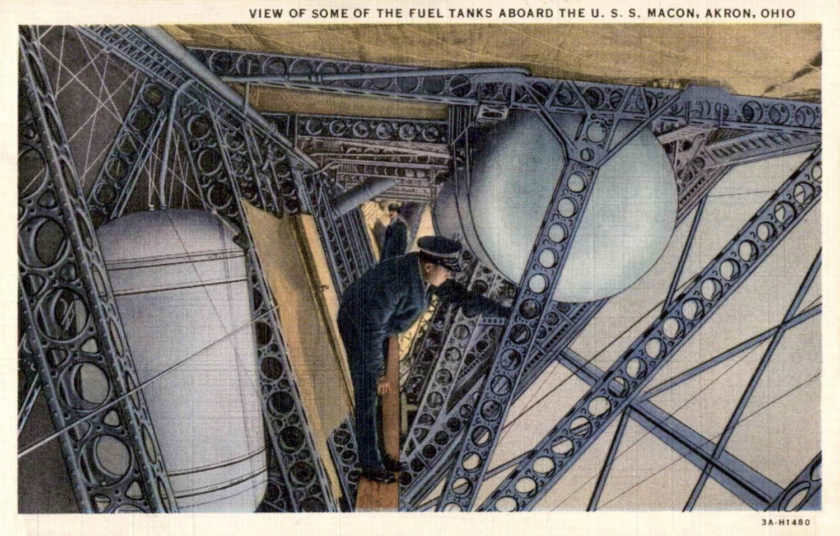
In this Picture Postcard view of the USS Macon, a member of the crew checks one of the ships many gasoline tanks prior to a test flight from the Goodyear-Zeppelin dock in Akron. This is the starboard lateral gangway. Narrow catwalks like this one stretched throughout the interior of the ships hull. The Macon ZRS-5, The Macon, was…
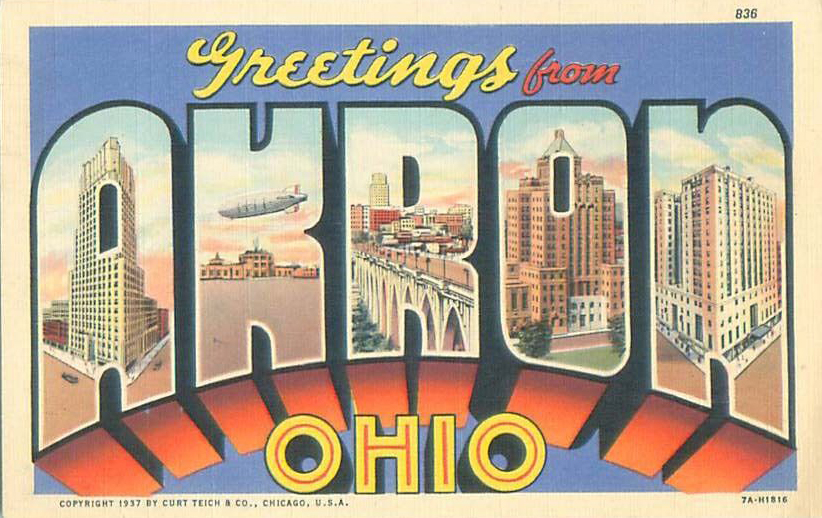
The city dates back to 1825 when General Simon Perkins and Paul Williams decided to set up a town along a proposed dam that was to be built across the Cuyahoga River. Ruins of this dam can still be seen near the city of Akron.
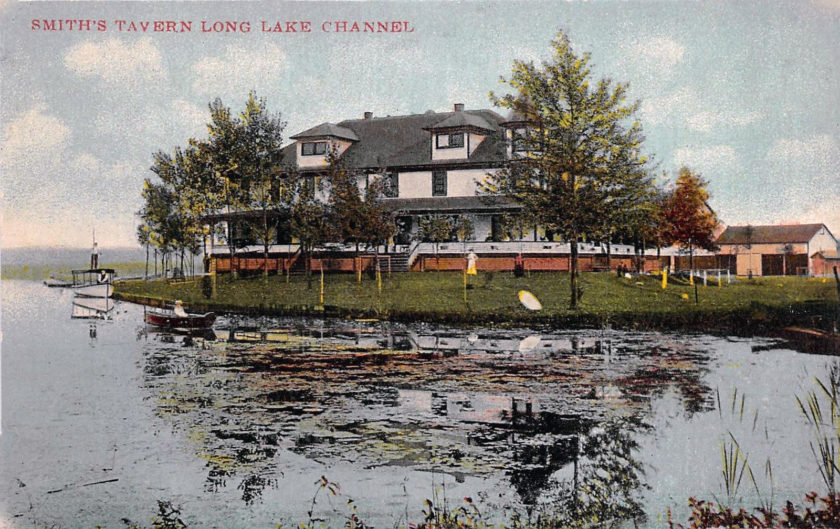
George M Smith’s popular tavern along the Long Lake Channel in the Portage Lakes area outside Akron.

As the US Navy’s newly built USS Akron flys overhead, the Akron Municipal Airport and its distinctive architecture stand proudly below in this vintage Akron Postcard. Opening in 1929, the Akron Municipal Airport at one point was a U.S. naval air station, known as Naval Air Station Akron. Today the airport is known as the…
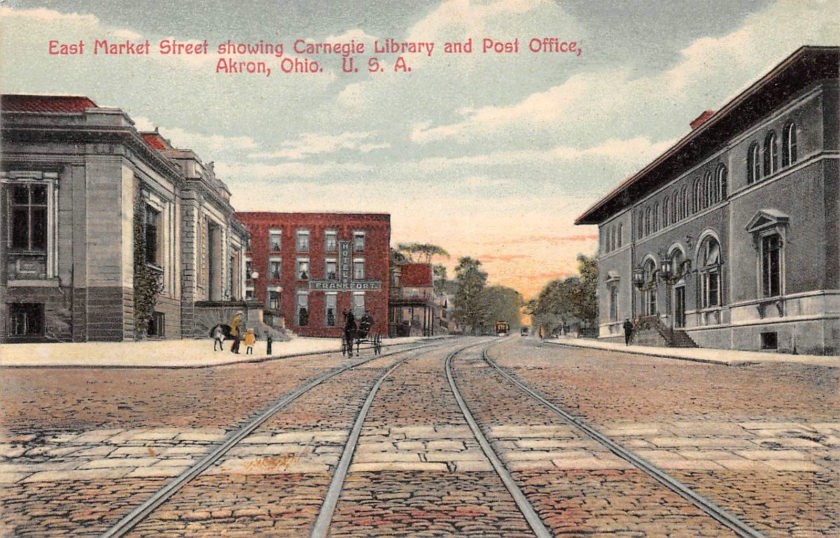
View of the Hotel Frankfort on Akron’s Market Street. The hotel was north of the old Library and Post Office.
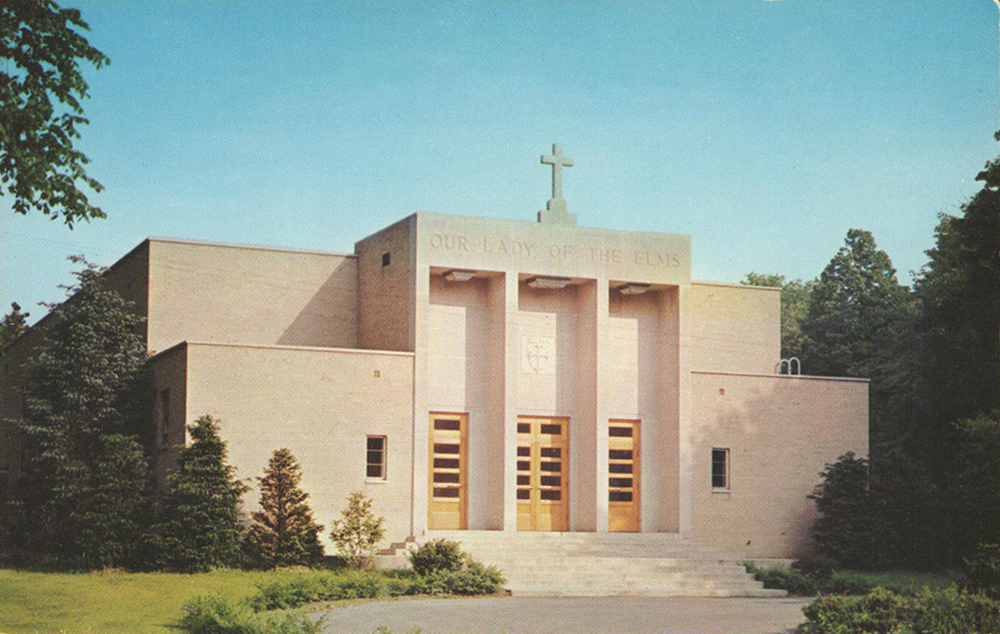
Our Lady of the Elms High School is a private, all-girls independent Catholic college preparatory high school founded by the Sisters of St. Dominic (now Dominican Sisters of Peace) in 1923.
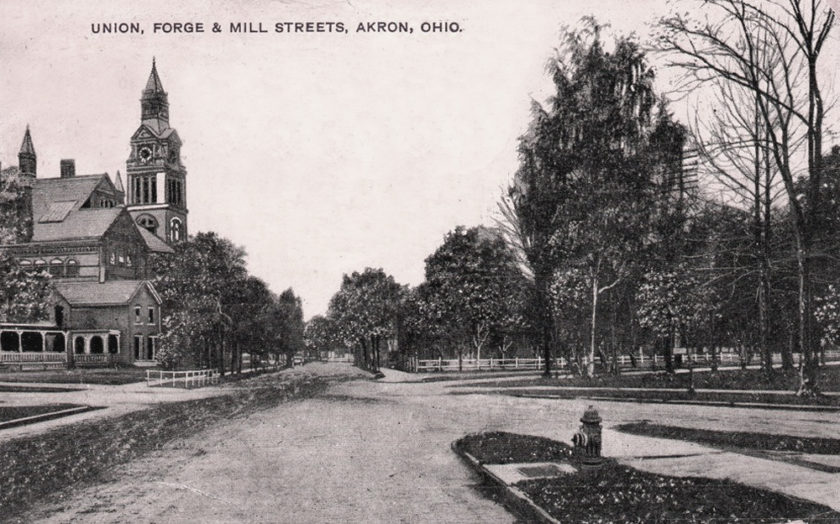
A view of the much-changed intersection of Union Street, Forge Street and Mill streets near downtown Akron. Akron’s old High School can be seen on the left side of the image. Union Park is ahead on the right.
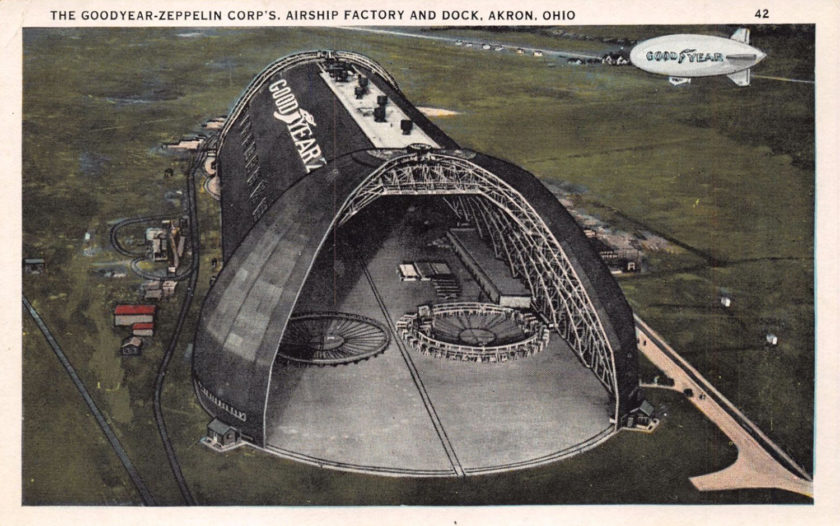
The Air Dock, as it is known, was constructed in 1929. It was the largest building in the world without interior supports and provided a huge structure in which “lighter-than-air” ships (later known as airships, dirigibles, and blimps) could be constructed. The first two airships to be constructed and launched at the Airdock were USS Akron and its sister ship, USS Macon, built…
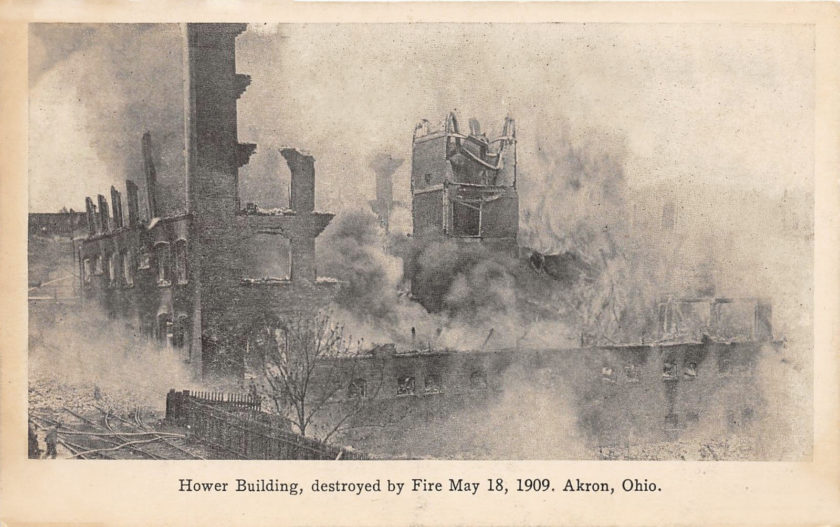
On May 18, 1909, a fire in the seven-story Hower Power block destroyed the building and its contents, causing losses in excess of $1,500,000. Several girls employed in the building had a narrow escape. Firemen were in danger from falling walls. The building was occupied entirely by light manufacturing companies. There were more than 200…
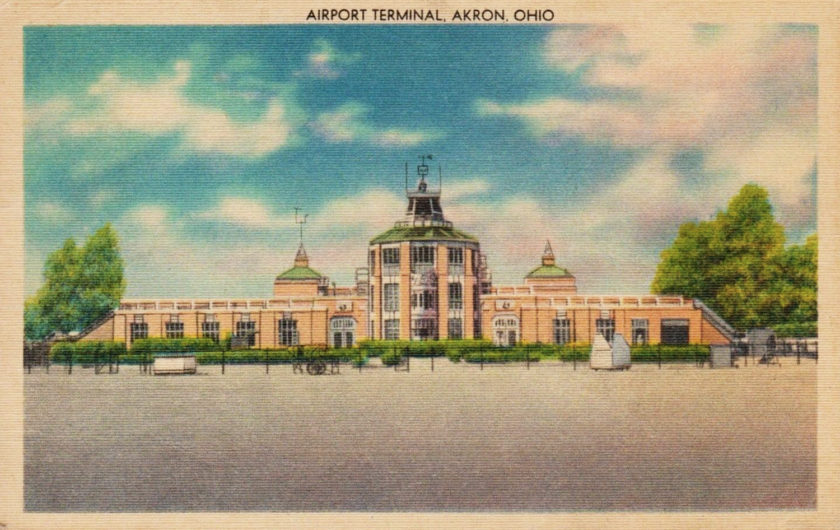
In 1942, one of the area’s worst aviation accidents occurred when a Martin B-26B Marauder crashed shortly after takeoff. The plane was on a routine training mission during World War II when it stopped off at Akron (Terminal) Municipal Airport to refuel. During takeoff, a faulty rubber seal lead to engine failure causing the plane to crash into…
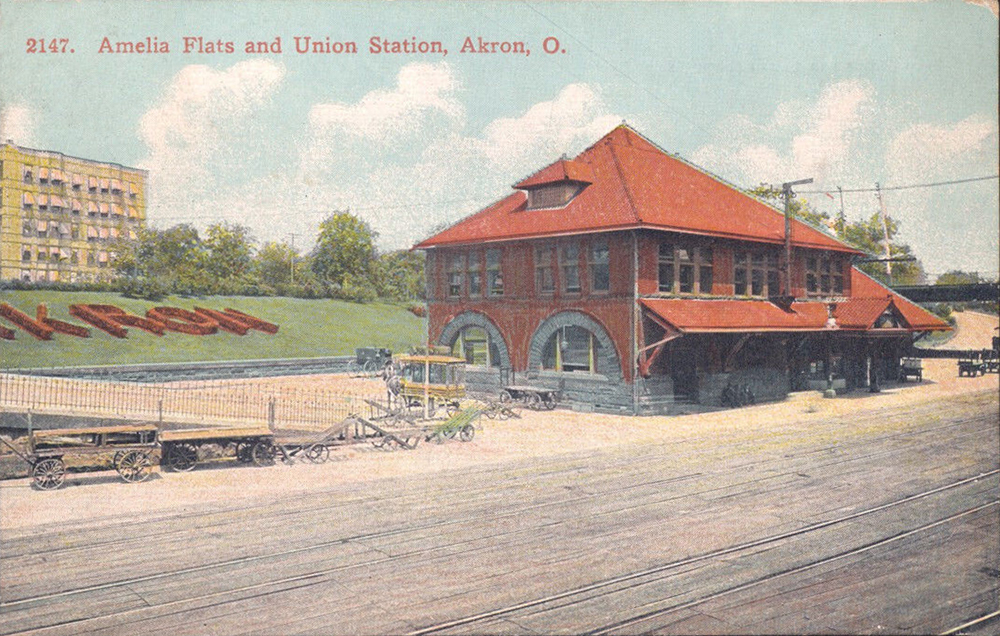
Amelia Flats was the first of two apartment building constructed by businessman Horace B. Camp (1838-1907). The flats were built as upscale suites in a neighborhood well known for its affluent residents – Barber, Buchtel, Bierce, Firestone, Hower, Seiberling and Schumacher.

With a train in the background a sunken canal boat in the foreground, and the prominent Northern Ohio Railway bridge towering over the scene, this historic postcard image gives a glimpse into Akron, Ohio’s transportation history.
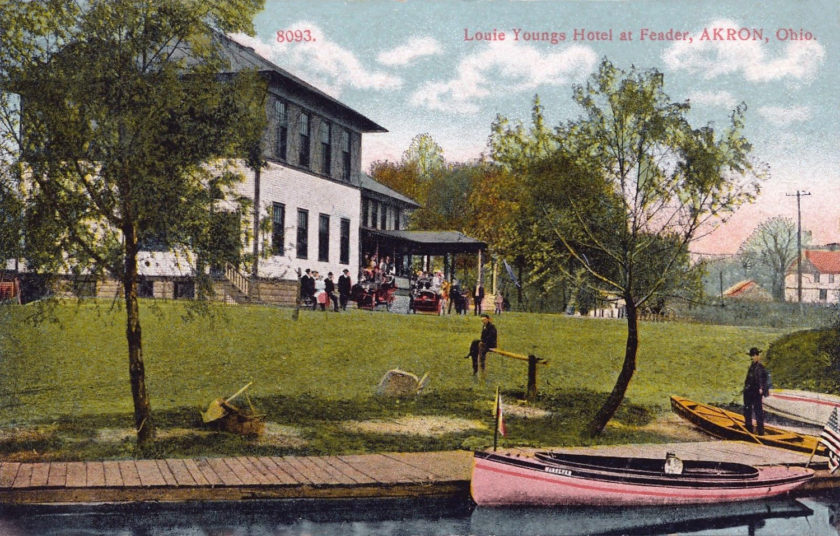
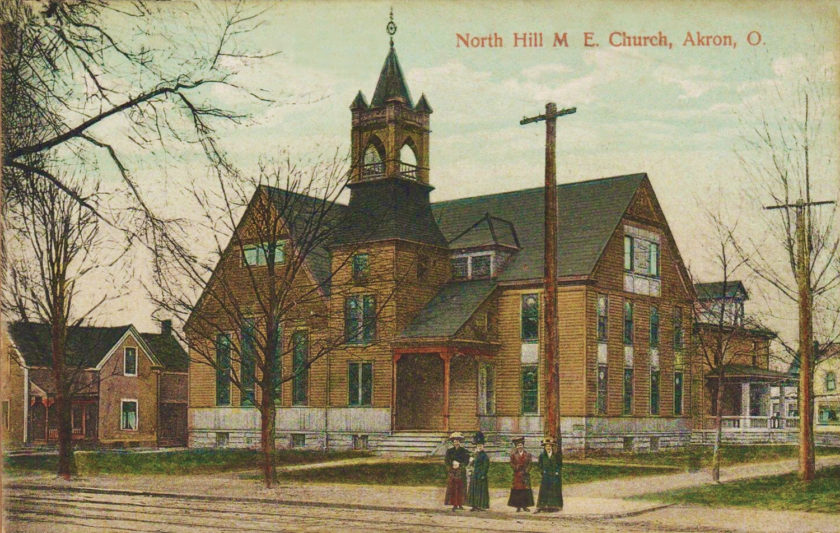
North Hill M.E. Church began on February 1, 1891 by Rev. O.A. Curry.
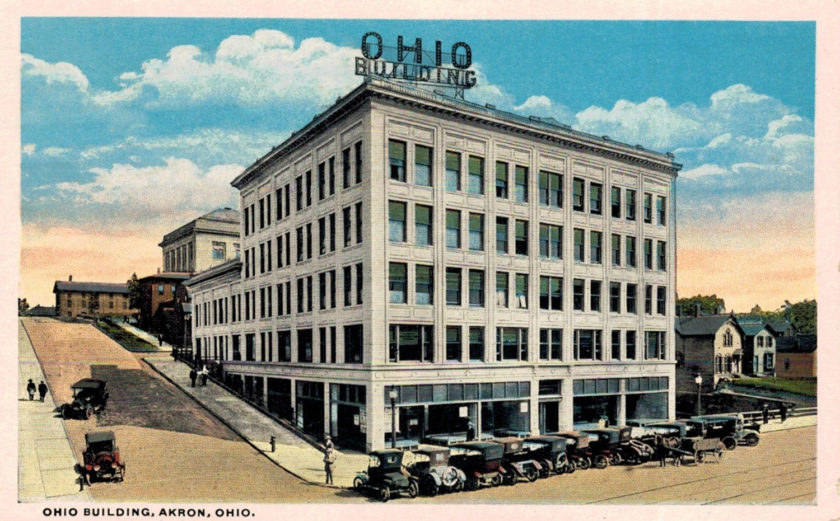
This is the Ohio Building in Akron, Ohio. In this postcard view, old cars can be seen parked along the front and side of the building. Additionally, a horse and cart are seen on the street making deliveries.
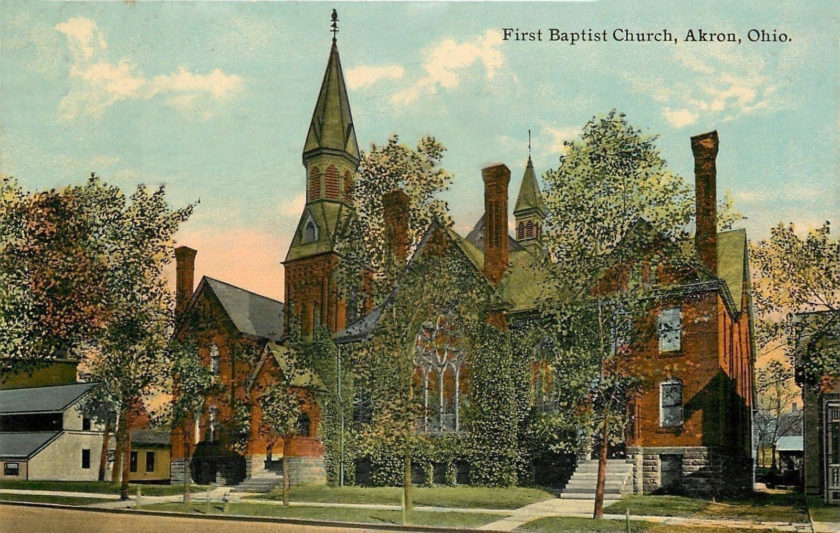
Founded in 1834, First Baptist has a long history of ministry in Akron community. The church was initially established with just nine people who met in a schoolhouse. About two years later, construction began on their first building on the corner of East Center Street and Buchtel Avenue. In 1853, the church purchased the Old…
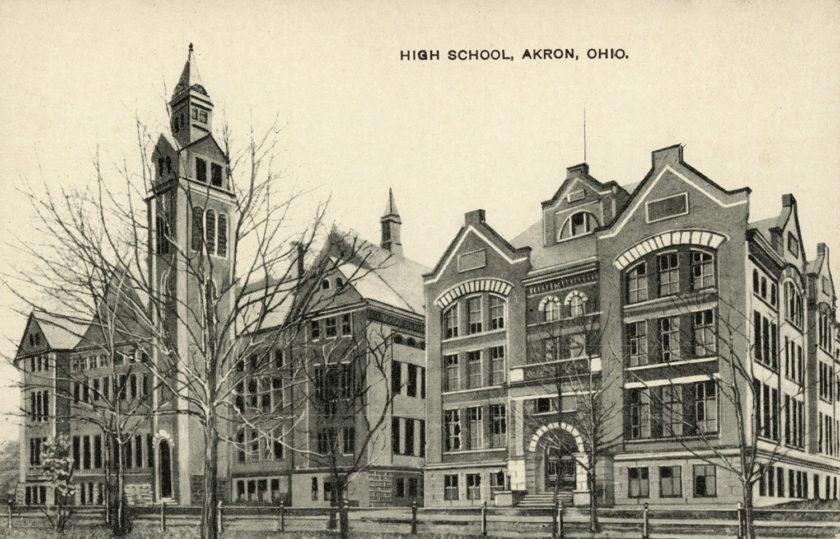
Akron’s first high school was located on Forge Street, between College and Union Streets, facing Union Park; the school was established in 1857, but the structure pictured in this vintage postcard was not constructed until 1885. At the time, the building cost $135,000 -that’s about 3.5 million in today’s dollars.

The dam was built in 1911-1912 by the Northern Ohio Traction & Light Co. as part of a hydroelectric plant that generated electricity for its Akron trolley cars. Use of the Hydroelectric generation plant was discontinued in 1958.