Right in the heart of Akron was a lake and amusement park. No wonder it was so popular among Akronites, it was just a ten-minute ride from the center of Akron and within walking distance of 20,000 people!
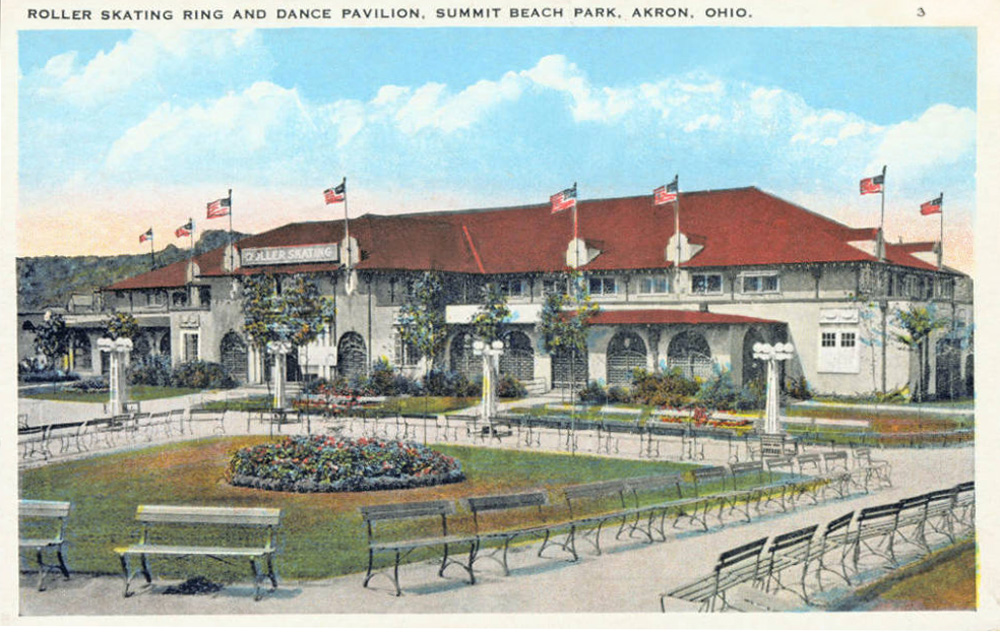

Right in the heart of Akron was a lake and amusement park. No wonder it was so popular among Akronites, it was just a ten-minute ride from the center of Akron and within walking distance of 20,000 people!
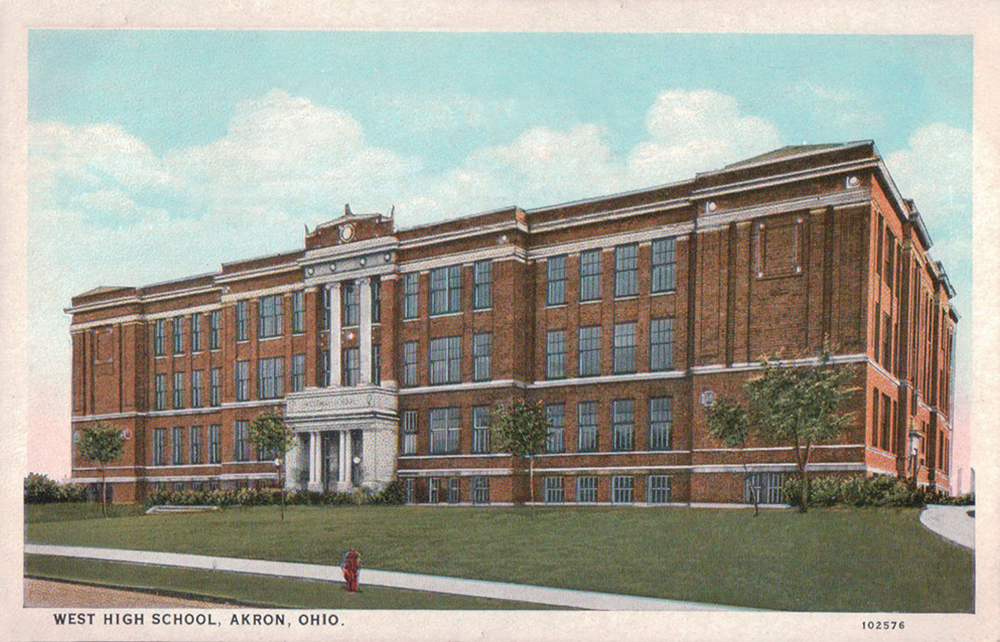
The spacious West High included a 1,200-seat two-level assembly room, a walled rooftop garden, and a modern gymnasium with running track. West graduated its largest class in 1931 — 125 students in January and 221 in June. Its final graduating class in June 1953 had only 136 members. Eventually, West became a junior high school…
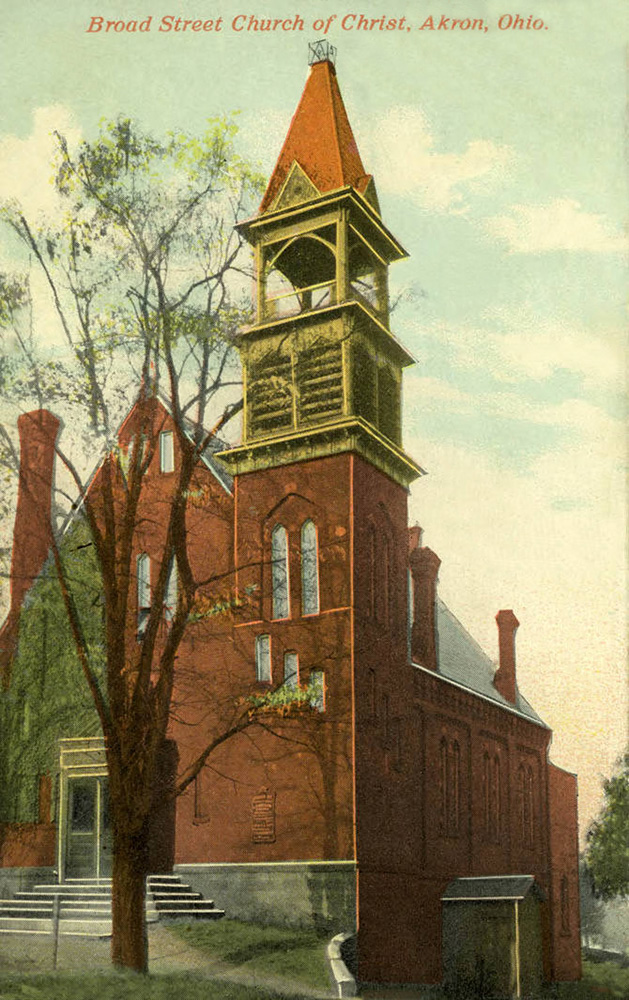
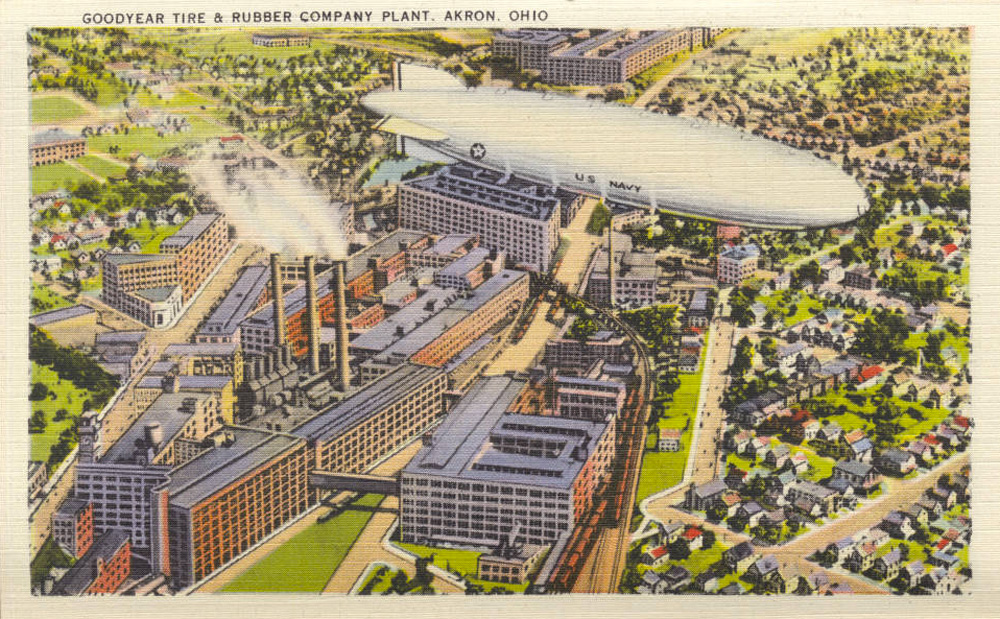
In 1898, Frank Seiberling borrowed $3,500 from his brother-in-law Lucius Miles for the down payment needed to buy an abandoned strawboard factory on the banks of the Little Cuyahoga River in Akron, where he would found The Goodyear Tire & Rubber Company
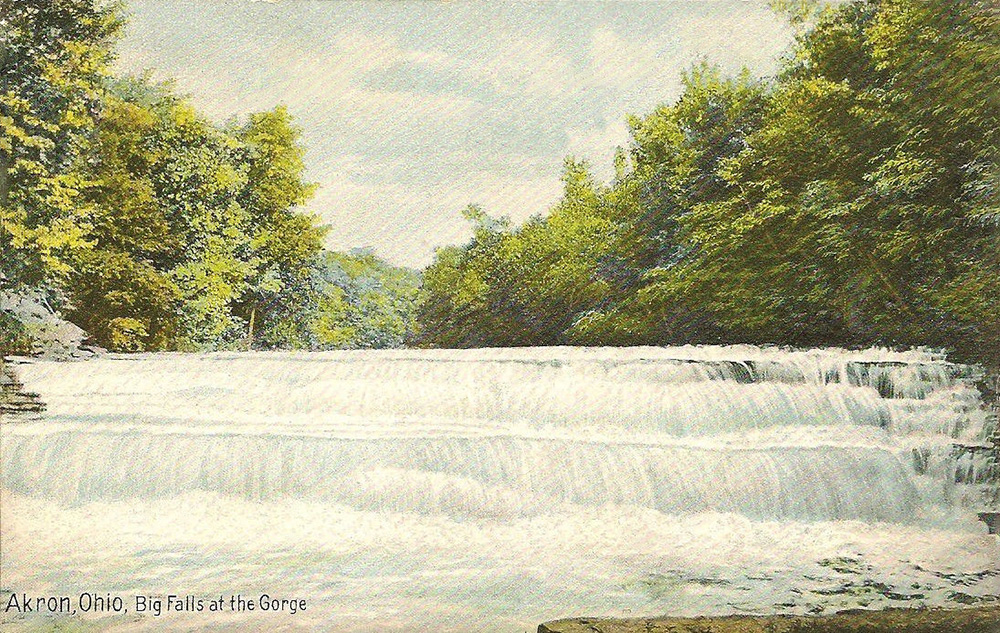
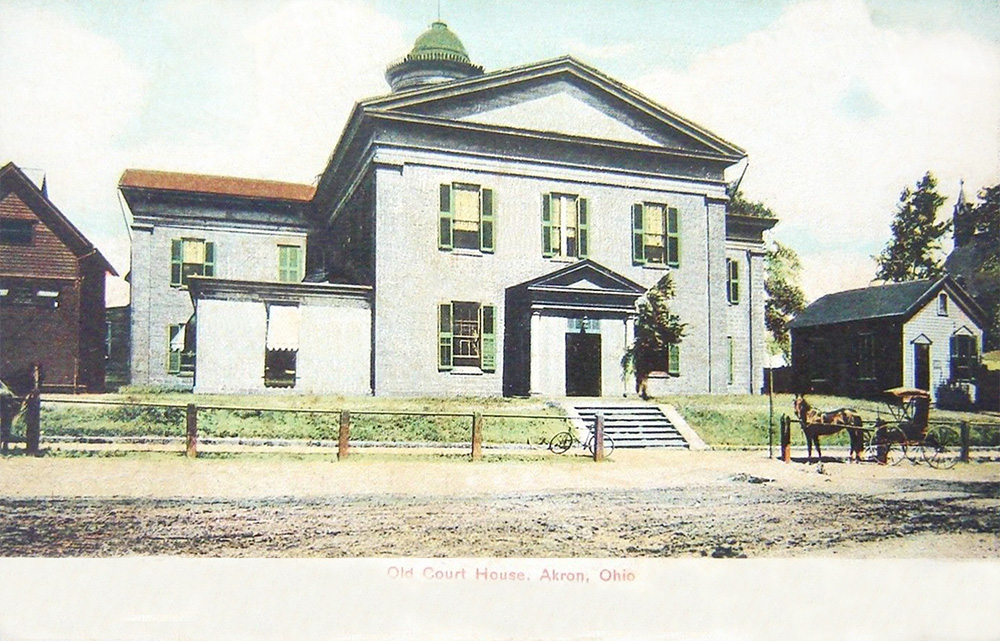
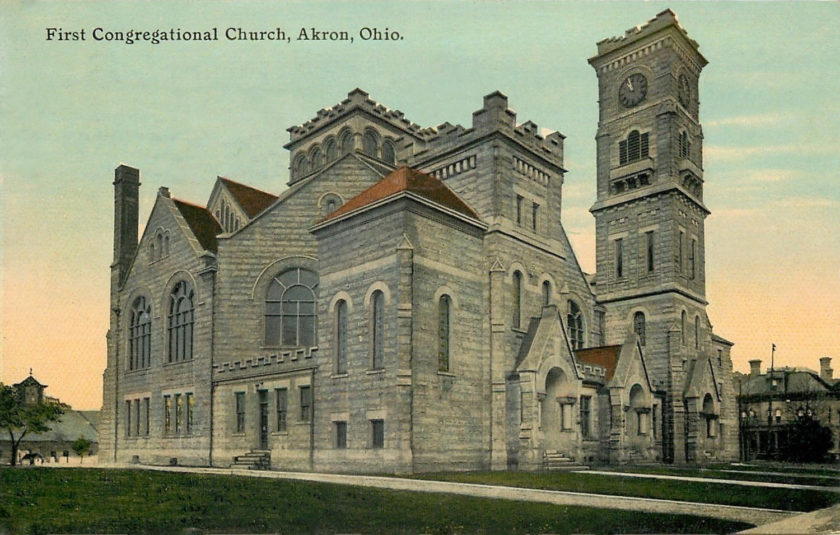
First Congregational Church was established in 1833 as Akron’s first formally organized church congregation. The current church building, pictured here, was constructed in 1909-10 and is made of made of Bedford limestone. The bell and clock tower is100 feet high and 18 feet square. Location: East Market and Union Streets
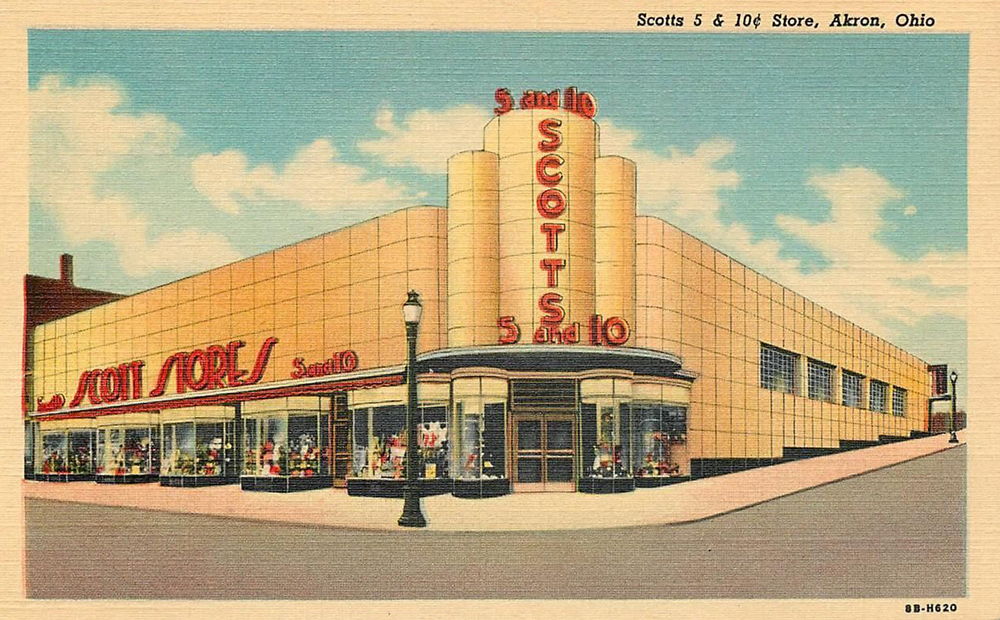
Located on Main Street, Akron’s Scotts Store was a popular five and dime with a lunch and snack counter.
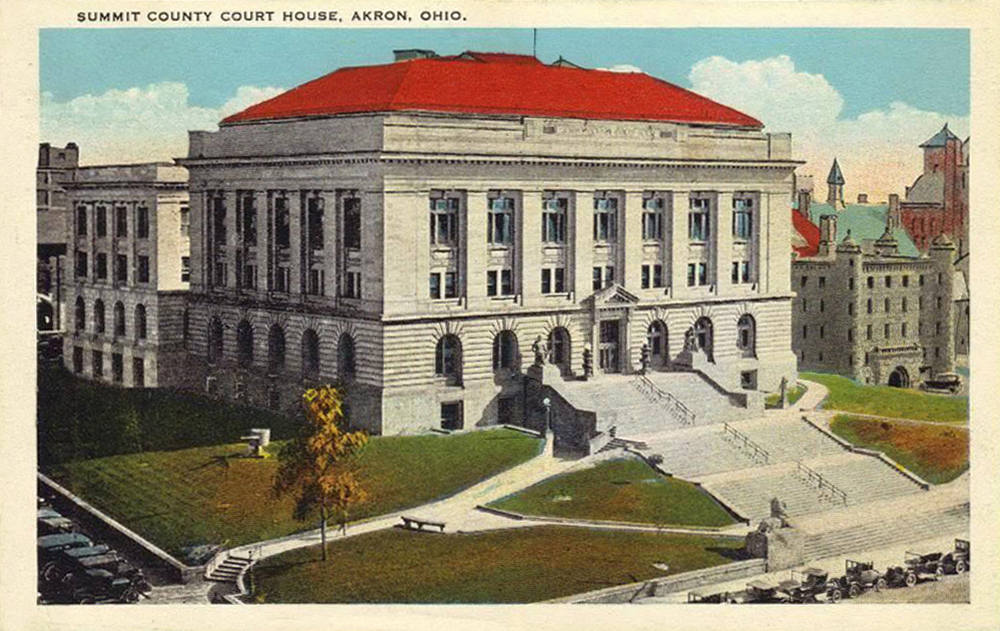

Vintage images of Akron’s Market Street.

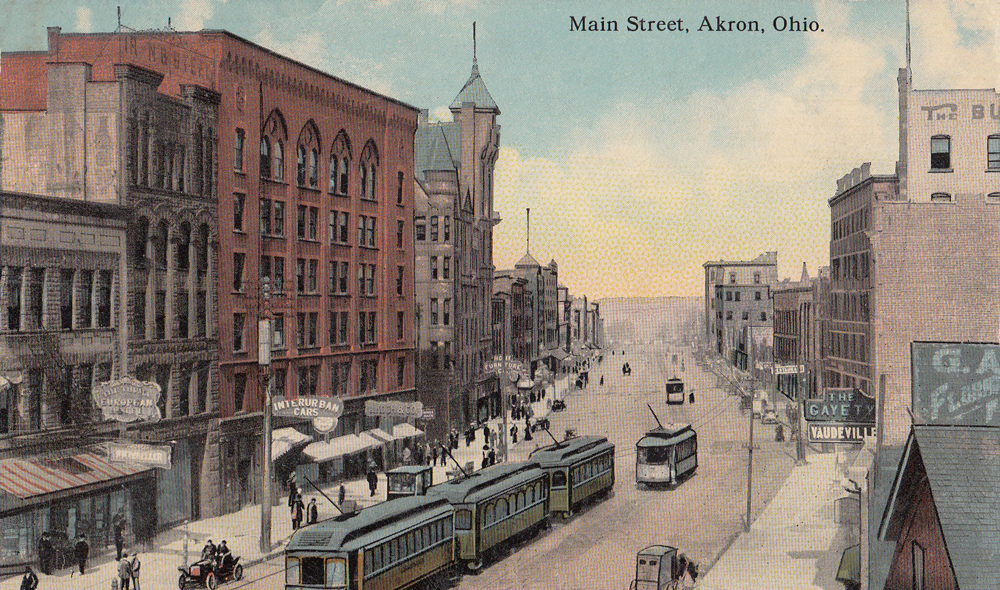
Main Street Akron Postcards
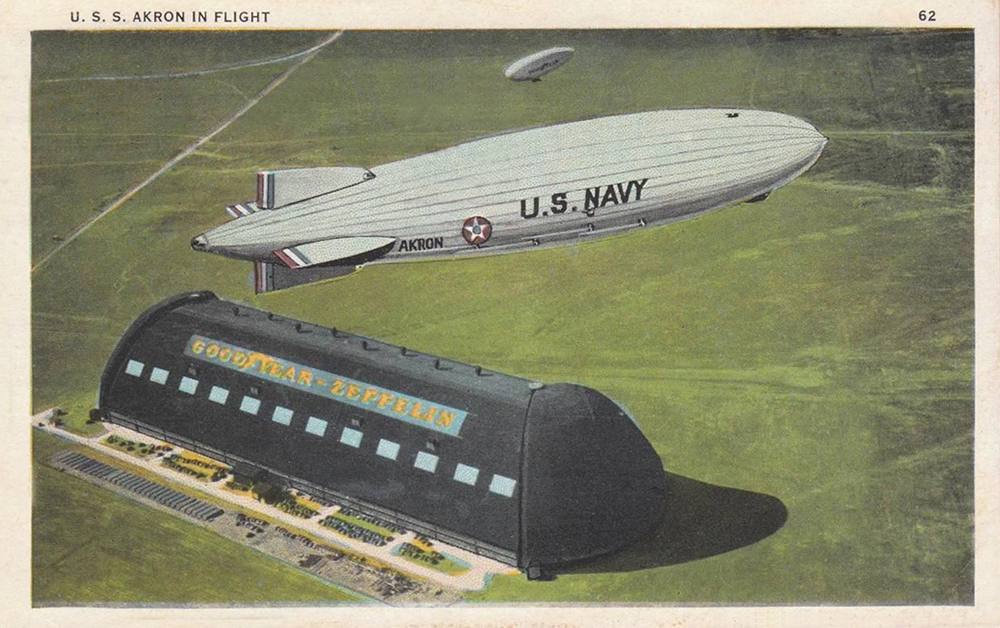
Mistaken Identity The airship featured on this vintage Akron postcard was not the USS Akron ZRS-4. Pictured here is most likely the USS Los Angeles. Misidentifying these airships was not a one time an artist made this ][mistake. On another popular postcard of the day, the USS Los Angeles is shown flying over Washington D.C., but she was…
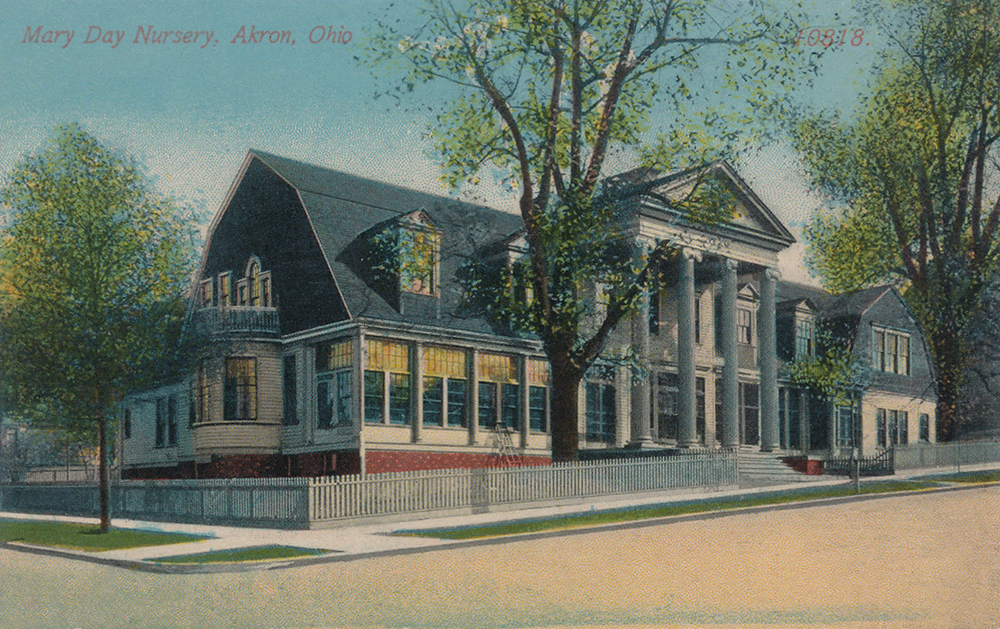
Organized in 1880, the organization was first called the Akron Day School and occupied rooms in the Union Charity Association Building on S. High Street. In 1891, ‘Colonel’ Perkins, impressed by the work of the daycare center, presented it with a house and lot on South High Street near Buchtel Avenue. The name “Mary Day Nussary” was taken…

In the early 1900s, Akron was growing faster than any other city in America. An increasing need for quality healthcare services led Dr.s W.W. Leondard, A.F. Sippy, and G.M. Logan to imagine a new hospital that would be financed, owned, and patronized by the people of Akron. With the financial help of Akron’s elite, including names…
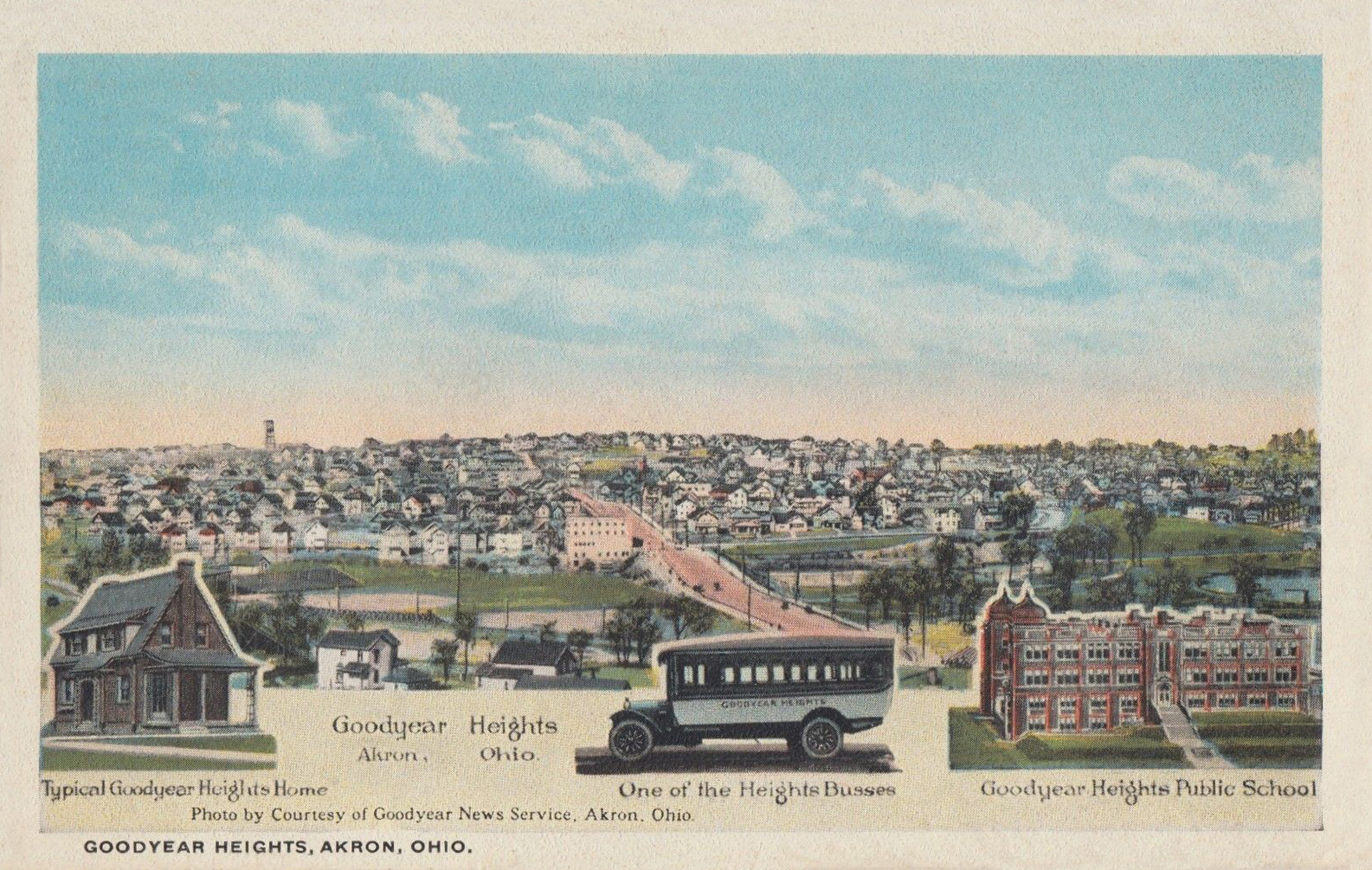

The first horseless (motorized) police vehicle introduced in the United States was used in Akron, Ohio. The vehicle had seating space for 12 people. The car was often called a squad car because it was used to transport a squad of police officers to a crime scene.

Looking nothing like a jail, this stunning structure was erected in 1902. Inside the sandstone walls were living quarters for the county sheriff and cells for up to 100 prisoners. In 1965 the building was destroyed to make way for the new City-County Safety Building.

Originally called the Grace House, (later known as the Sawan Building), the Y.W.C.A. moved into this building in 1907 after remodeling and adding a cafeteria, swimming pool, gym, and track. The building remained a part of Akron’s structurescape until its demolition in 1994.
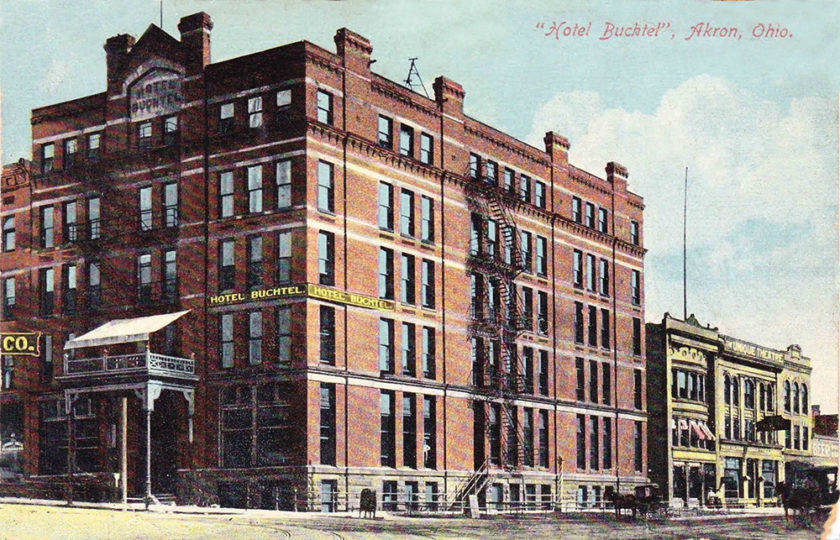
Built by William Buchtel (1822-1914), the five-story brick and stone hotel opened in 1884 on the southeast corner of Main and Mill Streets. It featured a hydraulic-powered elevator, electric lights in every room and bathrooms on every floor.
