The Unique theater on Main Street was one of Akron’s famous vaudeville theaters. Around 1905, The Unique would be converted into Akron’s first motion picture theater.
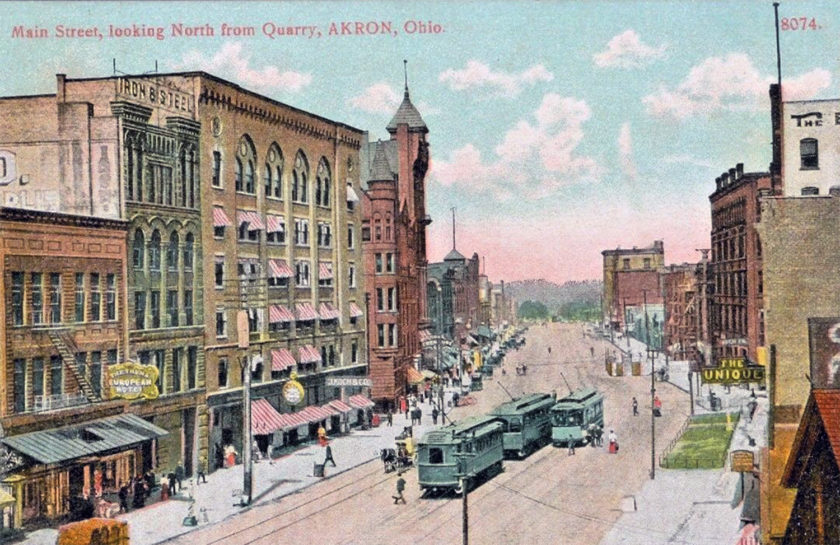

The Unique theater on Main Street was one of Akron’s famous vaudeville theaters. Around 1905, The Unique would be converted into Akron’s first motion picture theater.

From 1891 through 1950, Akron’s Union Station was an important busy part of the city’s growth. The railroad station served passengers on trains from the Baltimore & Ohio (B&O), Pennsylvania and Erie railroads. In 1950, the railroad station was replaced by the new Akron Union Depot.

With a rapid increase of the Protestant population in the west part of the city, a new First Congregational Society formed in 1885. By 1887 the society had secured land and funding to construct their first church building at a cost of $6,300. The original church site was located on the Northwest corner of West…

The Empire House opened on November 20, 1847. The hotel served Akron visitors until it was torn down in 1912 to make way for the Portage Hotel.

Ohio Columbus Barber, the founder of nearby Barberton, Ohio, was one of the early manufacturers of rubber products in Akron. He organized and managed the Diamond Rubber Company up to the time of its 1912 acquirement by the B. F. Goodrich Company.
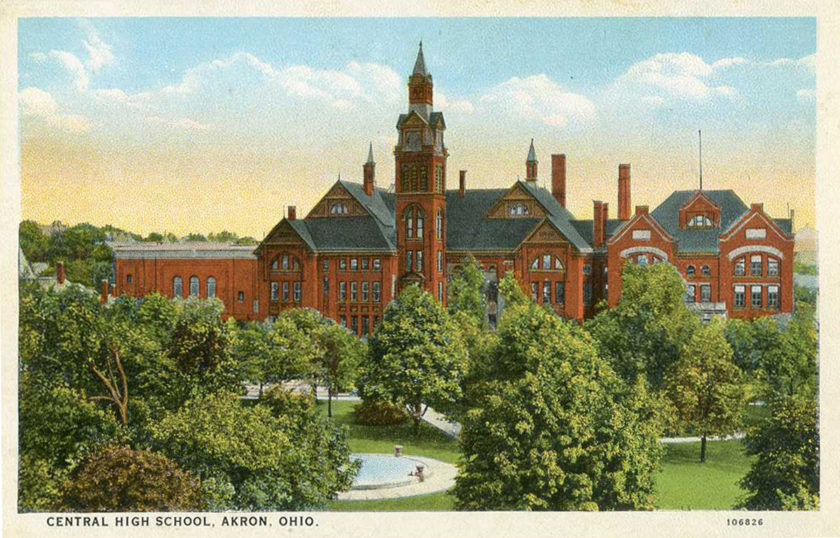
Akron High School was located on Forge Street, between College and Union Streets, facing Union Park. The school was established in 1857, but the pictured building was erected in 1885 at a cost of $135,000. The main tower stood 108 feet from the ground and housed a 2000 pound bell. The four illuminated clock faces…
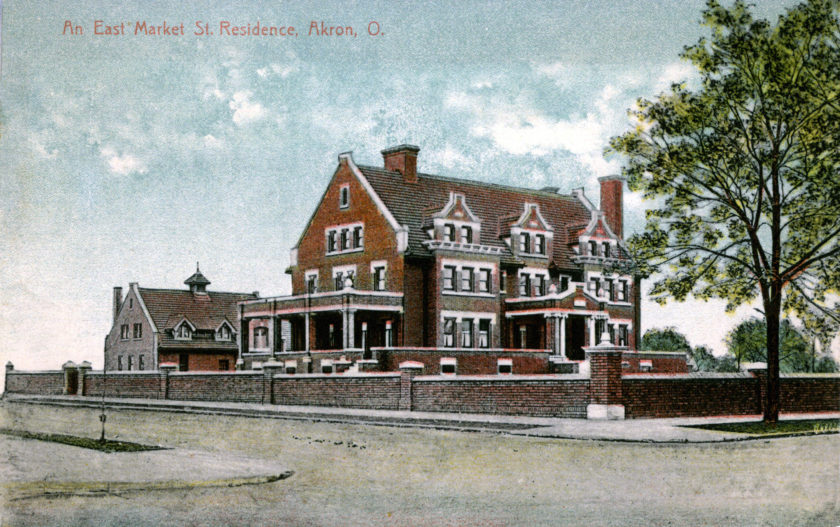
Although difficult to recognize today, East Market Street was once home to the area’s wealthiest and most influential residents. From industrial tycoons to the political elite, East Market was where they called home.
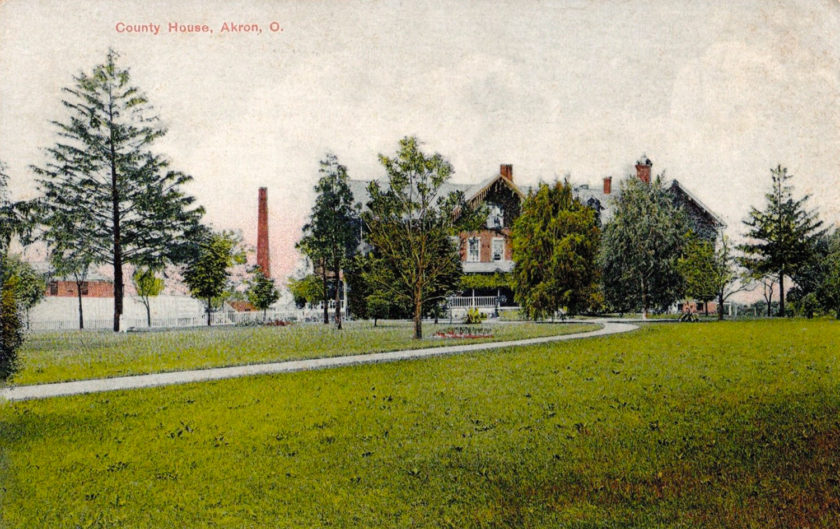
The County House – also known as the Summit County Infirmary – stood from 1865 to 1919 off West Exchange Street near the present site of Westminster Presbyterian Church between Rose Boulevard and Mull Avenue.
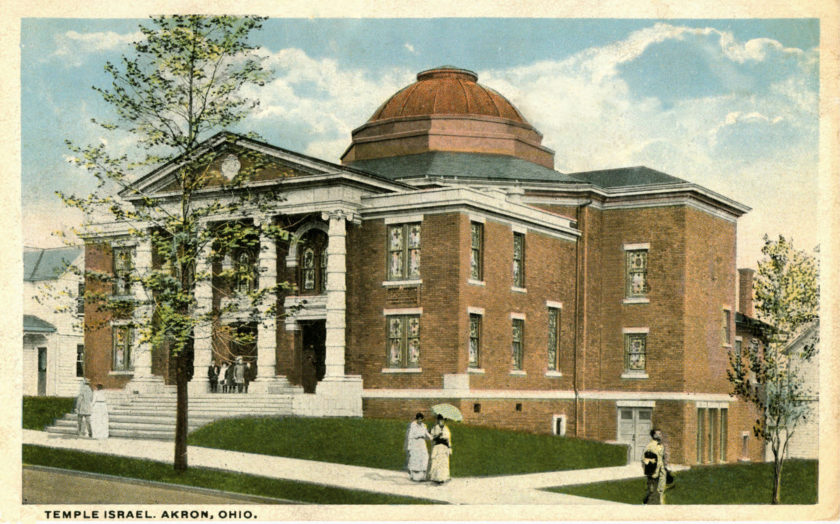
Built in 1911, the synagogue on Merriman Road replaced temporary space at St. Paul’s Episcopal Church on High Street. The facility underwent renovations and expansions in 1952 and 1987. It was replaced by a new synagogue in 2014 which is located at 91 Springside Drive, in Bath Township.
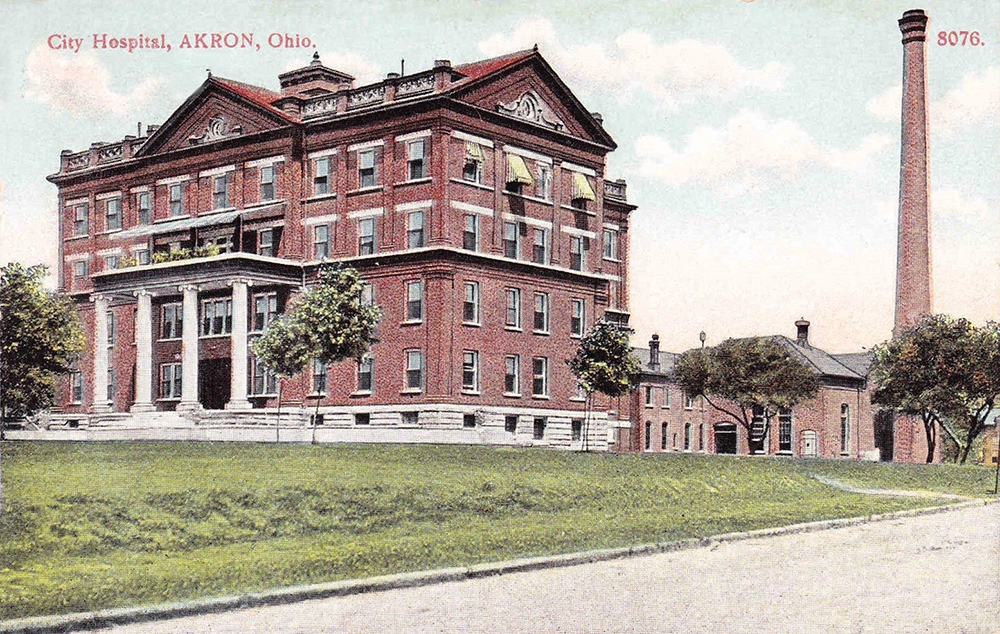
One of City Hospitals greatest supporters was industrialist Ohio Columbus Barber. By 1904, O.C. Barber had donated more than a quarter of a million dollars to the institution.

In 1898, Frank Seiberling established the Goodyear Tire and Rubber Company in Akron, Ohio. The company was named for Charles Goodyear, the man who developed vulcanized rubber.
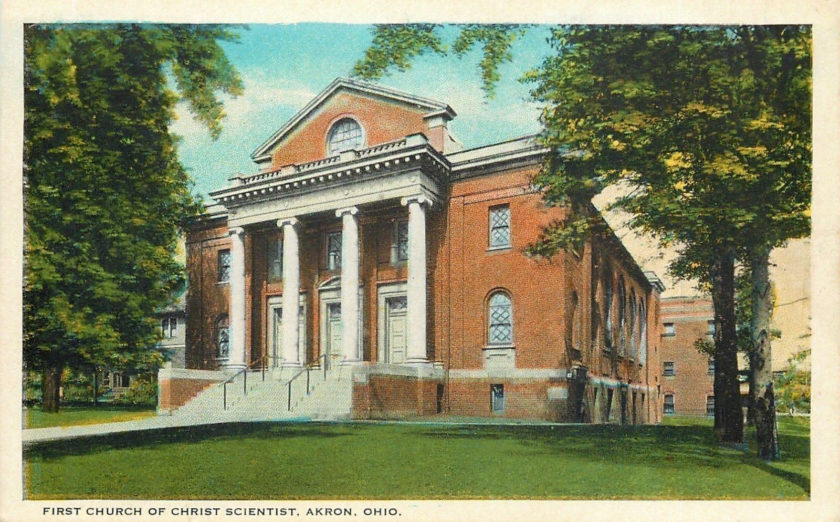
With a history in Akron dating back to 1880, the Christian Science Church has been a long standing part of the Akron landscape.
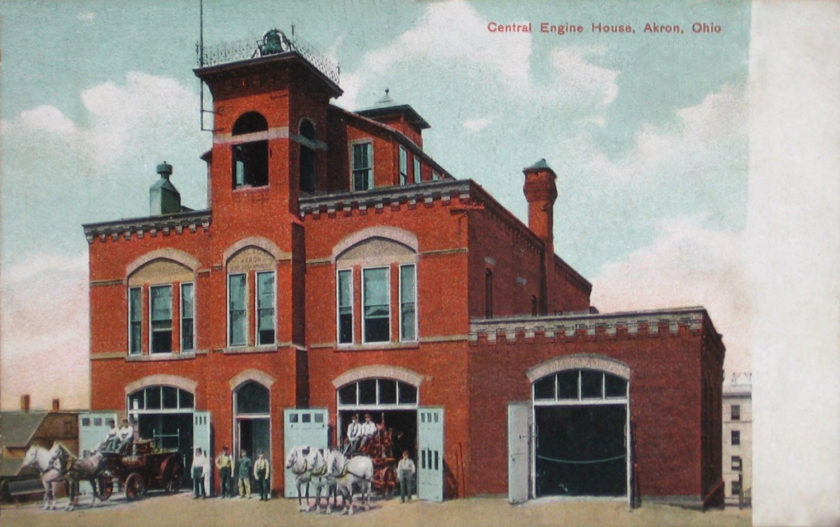
Akron Fire Department has a long and proud history dating all the way back to 1839 when the North Akron Fire Company was formed. Akron’s volunteer fire-fighting forces were consolidated to form the “Akron Fire Department” in 1866. The members of the department were placed on a full pay basis in 1903. The department was…
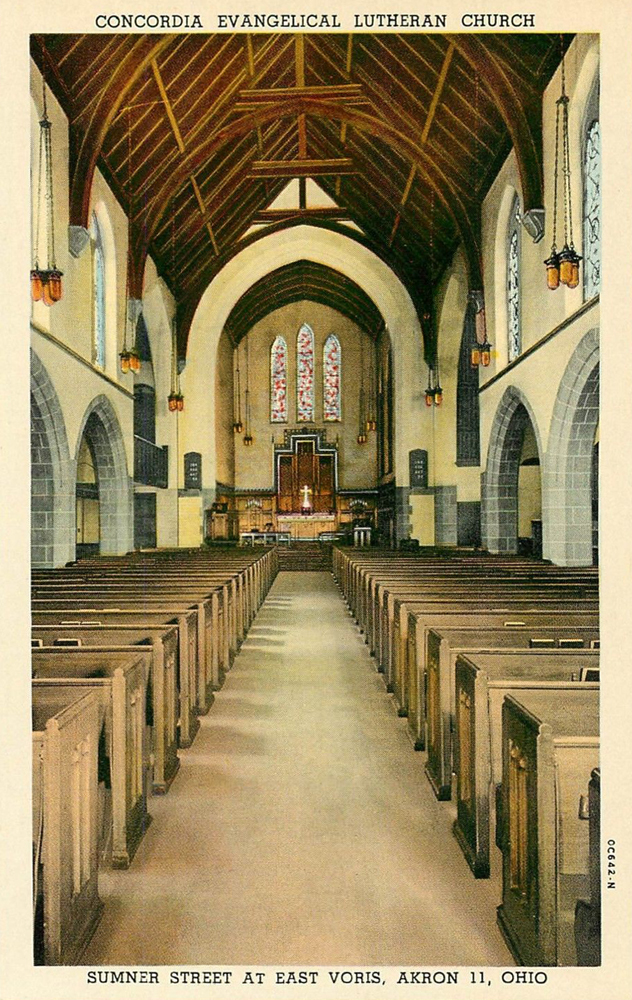
Sumner Street at East Voris, Akron 11, Ohio
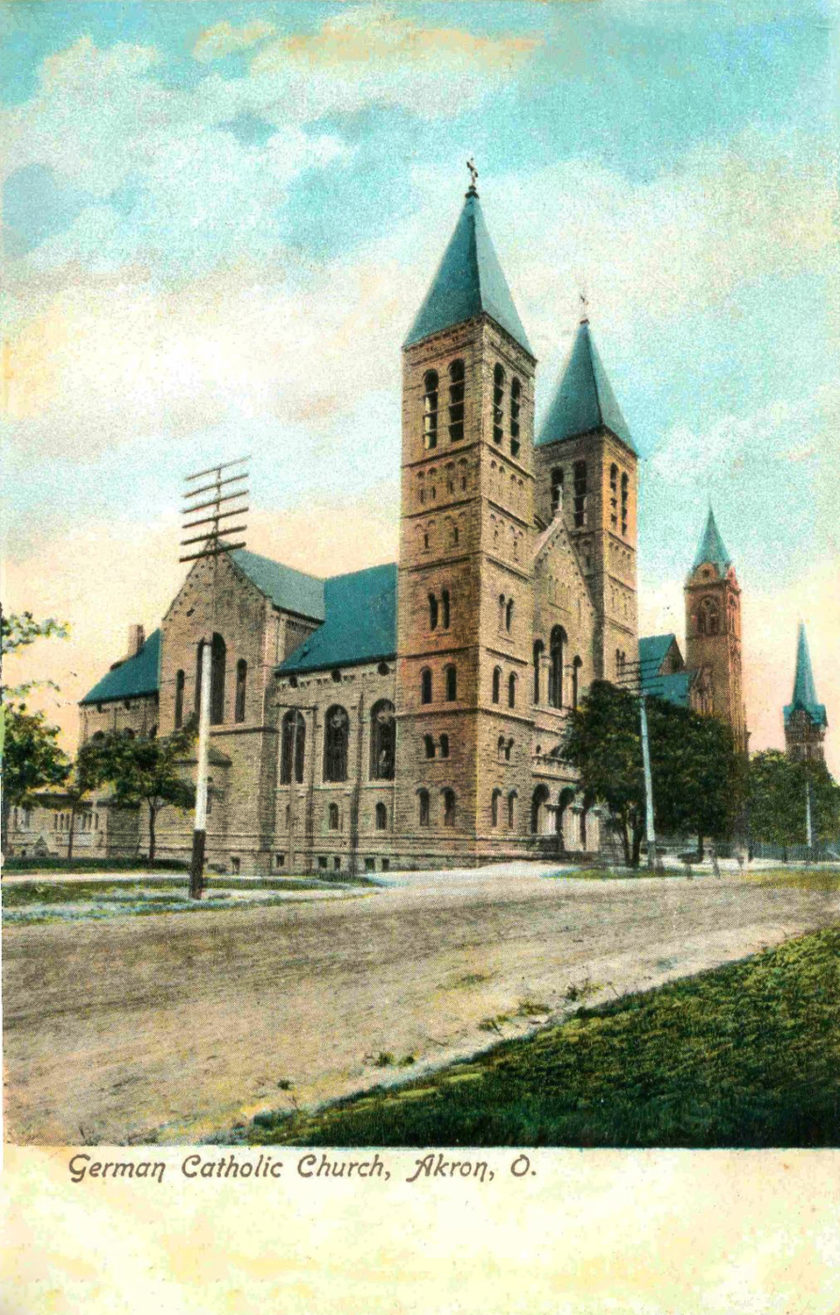
St. Bernard Catholic Church in Akron, Ohio, was declared a historical monument in 1989 when it was placed on the National Register of Historical Places. Distinctively German-Romanesque with a Baroque influence, its architectural style is patterned after many of the great cathedrals in the Rhineland region of Europe.
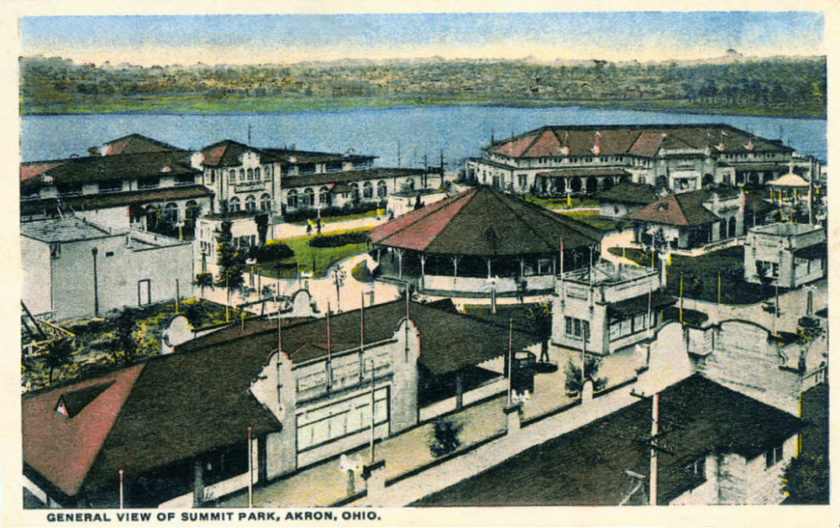
The brainchild of Akron businessmen John L. Snyder, Philip Austgen and Jack Rampanelli, Summit Beach Park began as a friendly conversation over billiards. Once constructed, the park went on to become one of Akron’s most popular entertainment destinations.
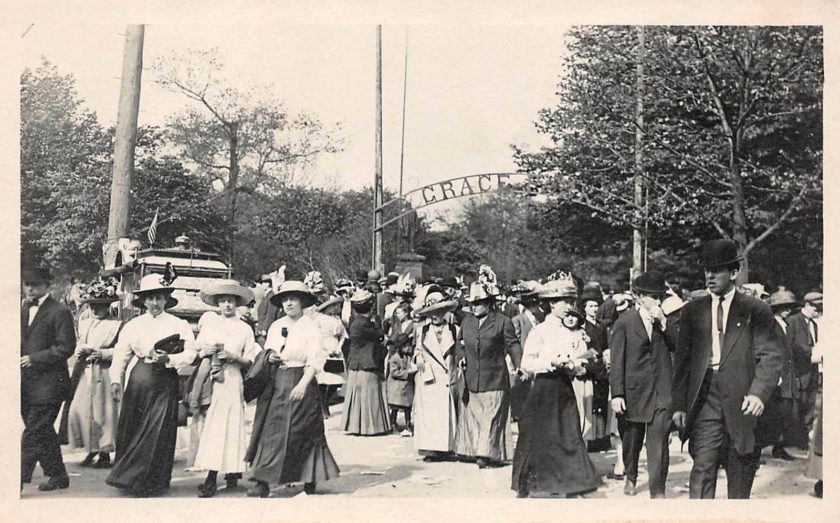
Before the mass exodus of manufacturing destroyed Akron’s reputation as a city of opportunity, places like Grace Park were often full of residents listening to speeches, celebrating victories and relaxing on a day off.
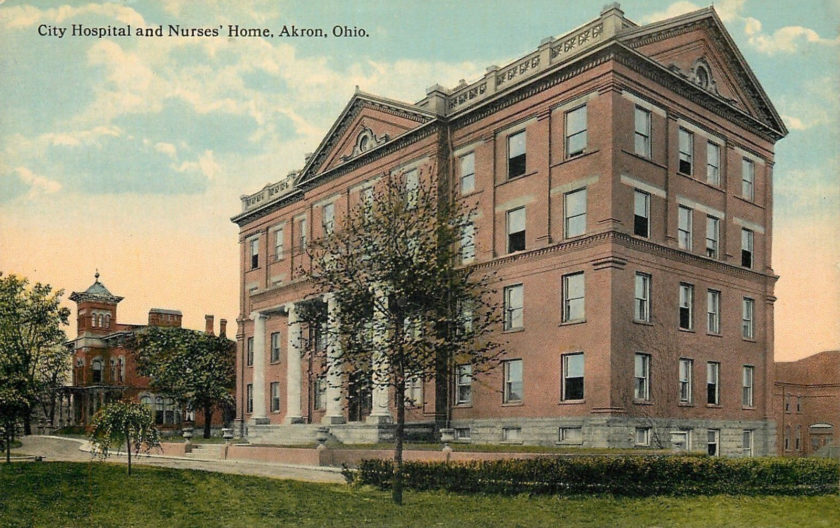
The main building of City Hospital was constructed in 1892, with the training school for nurses being added in 1897. The first class of nurses had just two students.
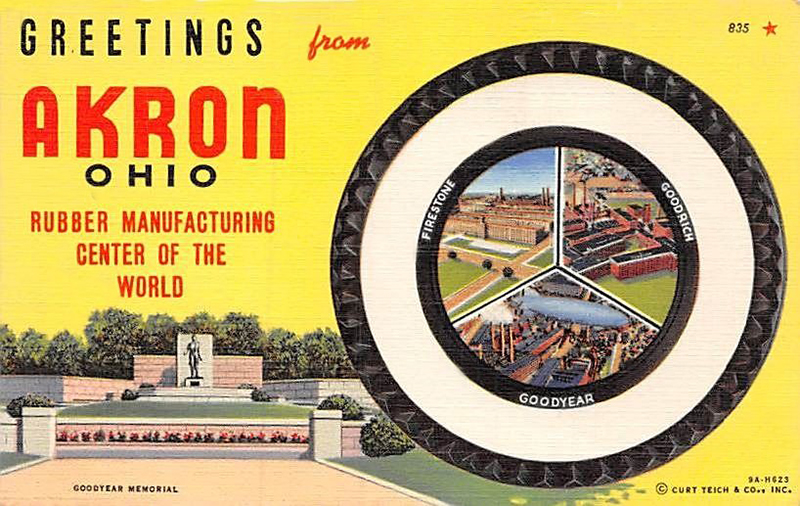
Its name came from a Greek word meaning “an elevation” or “point.” Many of the town’s earliest residents were Irish migrants employed to build the nearby Ohio and Erie Canal. Its location along the canal meant that many farmers brought their crops to Akron to be milled and then transported to other markets.
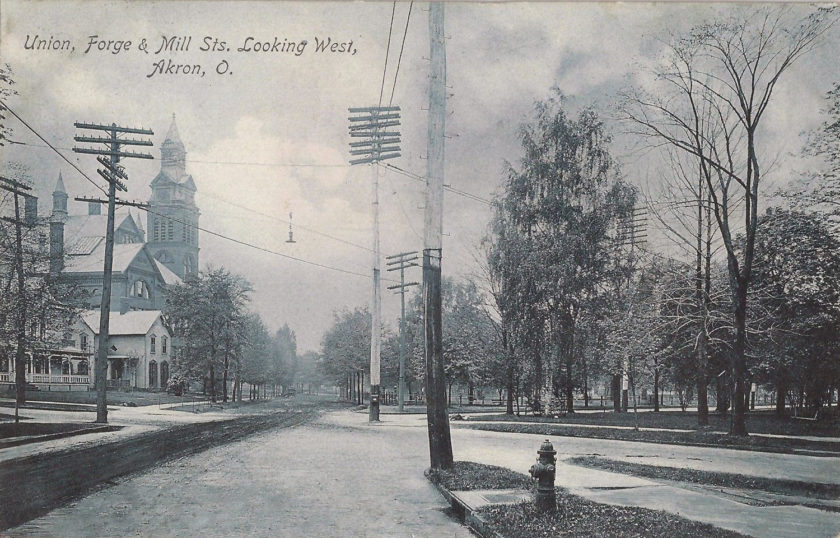
A view of the much-changed intersection of Union Street, Forge Street and Mill streets near downtown Akron. Akron’s old High School can be seen on the left side of the image.

Although grand in appearance, Akron’s Union Station was not a centerpiece of pride for Akronites. Many visitors complained that the railroad station was too cold in the winter, too hot in the summer, dirty, and small. Despite the complaints, the station lasted nearly 60 years before being replaced by the more modern Union Depot.

A view of a busy Main Street looking North with Mill Street as the first intersection. Akron was central to the street car and interurban rail traffic of the day.
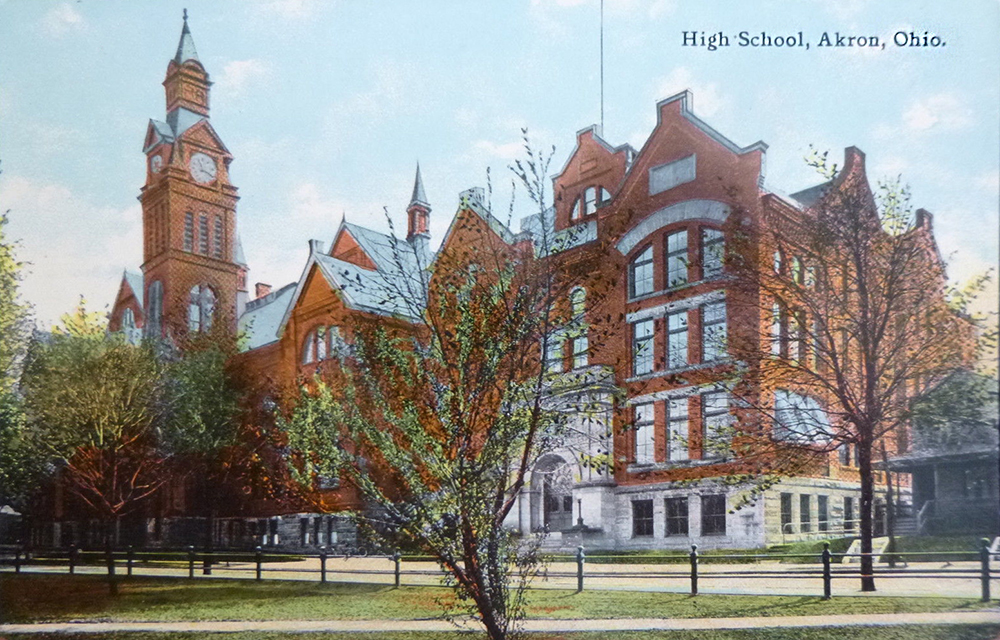
Central (Akron) High School was located on Forge Street, between College and Union Streets, facing Union Park. The school was established in 1857, but the pictured building was erected in 1885 at a cost of $135,000. The building stood until 1973 when it was demolished to make way for the new Central-Hower High School.
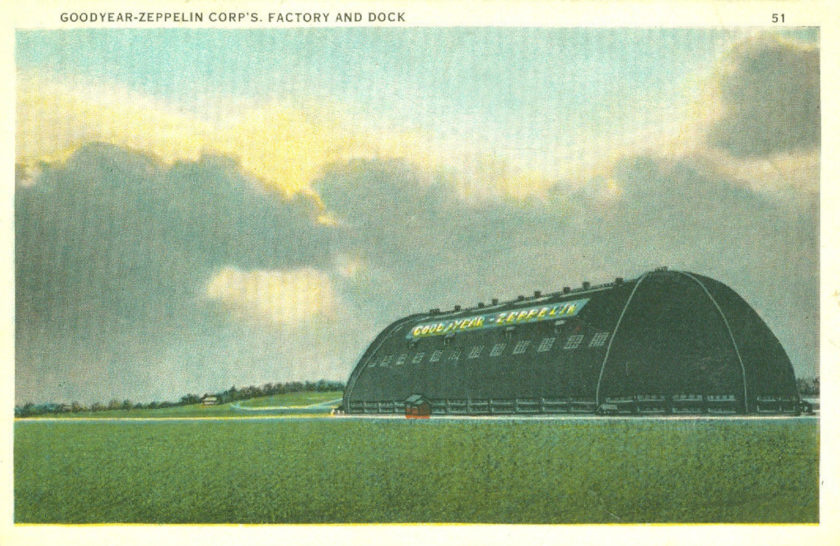
Postcard view of the colossus of engineering, the Airdock. The structure was built in 1929 for the building of the U.S. Navy’s rigid airships, the USS Akron (1931) and USS Macon (1933). The buildings eleven steel parabolic arches, cresting at 211 feet, create one of the largest open space interiors in the world and create…
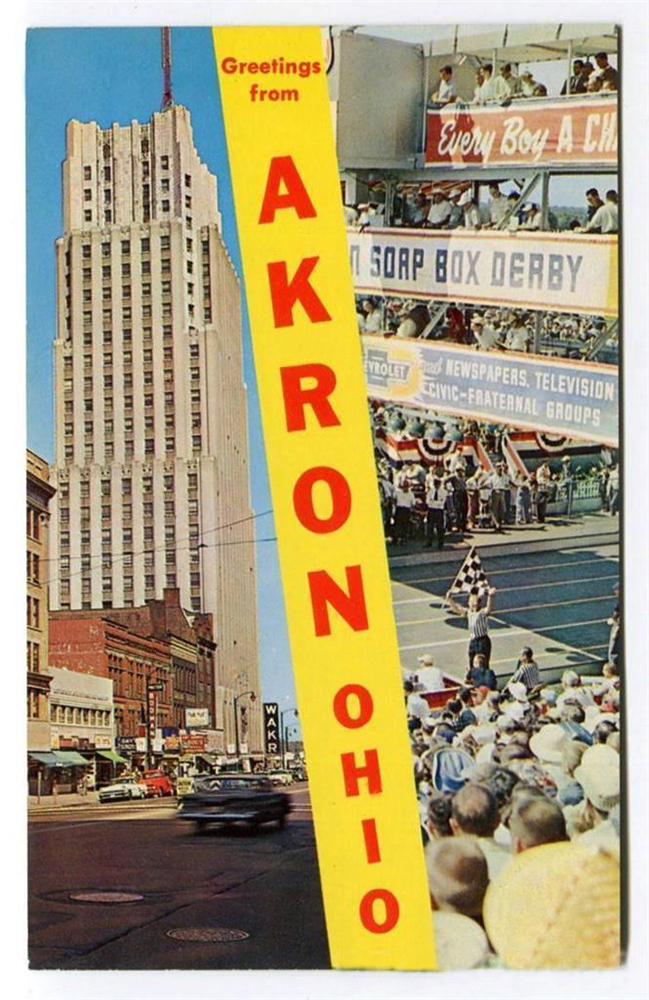
The American Soap Box Derby has a home in Akron but it didn’t start here. Dayton newspaperman Myron Scott came up with the idea in 1933. The first race was in 1934. The event quickly grew, gained sponsorships, and – thanks in part to tire companies – moved to Akron in 1935.